
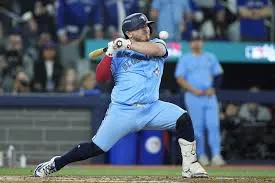
Alejandro Kirk’s height and weight have become one of the most talked-about topics among baseball fans, especially those who follow the Toronto Blue Jays closely.
In a sport where players are often tall, lean, and traditionally built, Kirk stands out immediately with a body type that challenges long-held assumptions about what an elite MLB catcher should look like.
This curiosity has led many fans to ask simple but important questions: how tall is Alejandro Kirk, how much does he weigh, and does his size affect his performance on the field?
What makes Kirk unique isn’t just his physical measurements, but how effectively he uses them to his advantage.
Despite being shorter and heavier than the average major league catcher, he has developed into a reliable offensive threat and a trusted presence behind the plate.
His success proves that skill, strength, and baseball intelligence often matter more than appearance.
In this article, we’ll take a detailed look at Alejandro Kirk’s height and weight, how they compare to other MLB catchers, and why his build has not limited his ability to succeed at the highest level.
Alejandro Kirk Height and Weight: Quick Facts
Alejandro Kirk’s height and weight are often the first details fans look up when learning more about the Toronto Blue Jays catcher. Officially, Alejandro Kirk is listed at 5 feet 8 inches (173 cm) tall and weighs approximately 245 pounds (111 kg). These measurements immediately set him apart from the average Major League Baseball catcher, who is typically taller and leaner. While many MLB catchers stand well over six feet tall, Kirk’s shorter stature has become a defining part of his public image.
Despite being shorter than most of his peers, Kirk’s weight reflects his strong, compact build rather than a lack of athleticism. His body composition gives him a low center of gravity, which can be beneficial for balance, stability, and power generation. This combination of height and weight allows him to remain solid behind the plate while also producing impressive results at the plate.
It’s also important to understand that listed player weights in MLB are not always exact. A player’s weight can fluctuate during the season depending on conditioning programs, workload, and overall fitness. Kirk’s playing weight may change slightly from year to year, but his overall physical profile has remained relatively consistent throughout his professional career.
When viewed in isolation, Alejandro Kirk’s height and weight may seem unusual for a professional athlete. However, when paired with his on-field production, these measurements tell a much different story. Rather than holding him back, Kirk’s unique size has become part of what makes him effective, memorable, and successful in today’s game.
Official Measurements vs On-Field Reality
While Alejandro Kirk’s height and weight are widely listed at 5 feet 8 inches and around 245 pounds, official measurements do not always tell the full story. In Major League Baseball, player height is typically measured once and rarely changes, but weight can fluctuate throughout a season. Factors such as travel, training intensity, recovery routines, and diet all play a role in a player’s actual playing weight at any given time.
For Kirk, on-field performance provides a better indicator of his physical readiness than the numbers on a roster sheet. During the regular season, catchers endure one of the most physically demanding roles in baseball. Squatting for long innings, absorbing foul tips, and managing pitchers place constant strain on the lower body and core. Kirk’s build has allowed him to handle these demands with consistency, suggesting that his conditioning is tailored to his body type rather than league norms.
Another important consideration is how body weight translates into functional strength. Kirk’s compact frame helps him maintain balance when blocking pitches and framing borderline strikes. His lower center of gravity makes it harder for opposing runners to disrupt him at the plate, especially during close plays. These practical advantages are not visible in height and weight listings but become clear during live gameplay.
It’s also worth noting that teams track far more data internally than what fans see publicly. Metrics such as flexibility, endurance, and strength-to-weight ratio are often more meaningful than raw weight alone. In Kirk’s case, his on-field mobility and durability suggest that his physical profile is optimized for performance, even if it appears unconventional on paper.
Alejandro Kirk’s Physical Build Explained
Alejandro Kirk’s physical build is best described as compact, powerful, and well-balanced. Unlike the tall, lean frames commonly associated with modern MLB catchers, Kirk carries most of his mass through his lower body and core. This distribution plays a significant role in how he performs both offensively and defensively. His shorter height gives him a naturally low center of gravity, which enhances stability and balance in nearly every aspect of the game.
From a mechanical standpoint, Kirk’s build allows him to stay grounded at the plate. His strong legs and core help generate torque during his swing, enabling him to produce surprising power despite not having the long levers that taller hitters rely on. This compact swing path also contributes to his ability to make consistent contact and control the strike zone, a key reason for his strong on-base numbers.
Defensively, Kirk’s body type supports his role as a catcher. His sturdy frame helps him absorb the physical demands of the position, including frequent squatting and contact with foul balls. The added mass through his lower half aids in blocking pitches in the dirt and maintaining positioning when framing borderline strikes for umpires.
While some critics focus solely on how his build looks compared to traditional athletes, Kirk’s physique is designed for efficiency rather than aesthetics. His success highlights that there is no single “ideal” body type in baseball. Instead, effectiveness comes from understanding one’s physical strengths and adapting technique accordingly, something Alejandro Kirk has done exceptionally well throughout his career.
Average MLB Catcher Height and Weight Comparison
To fully understand why Alejandro Kirk’s height and weight draw so much attention, it helps to compare him to the average Major League Baseball catcher. In today’s MLB, most catchers stand between 5 feet 11 inches and 6 feet 2 inches tall and weigh roughly 210 to 225 pounds. These players are often built with a balance of size, mobility, and arm strength designed to handle both offensive and defensive responsibilities.
When placed next to these averages, Kirk clearly falls outside the norm. He is several inches shorter and noticeably heavier than the typical catcher, which naturally fuels debate about whether his size is a disadvantage. However, this comparison also reveals an important truth: baseball success is not limited to one physical template. While taller catchers may benefit from longer reach and throwing angles, shorter catchers like Kirk can excel in other areas.
Kirk’s lower center of gravity gives him superior balance compared to many taller peers. This advantage becomes especially clear when blocking pitches in the dirt or setting a strong base for throws to second base. His build also helps him stay stable during quick lateral movements, an essential skill for managing wild pitches and framing close calls.
Additionally, offensive performance often varies independently of height. Kirk’s ability to control the strike zone and make consistent contact offsets any perceived physical shortcomings. When comparing raw measurements alone, Kirk may appear unconventional, but when performance metrics are added, the comparison becomes far more favorable. This contrast highlights why average measurements provide context, not limitations, in evaluating a player’s true value.
Alejandro Kirk’s Early Career and Scouting Reports
During Alejandro Kirk’s early career, his height and weight were among the most discussed aspects of his profile by scouts and analysts. As a young prospect, Kirk did not fit the traditional mold teams often look for in catchers, leading to questions about his long-term durability and athletic ceiling. Many scouting reports acknowledged his natural hitting ability but expressed concern about whether his body type would limit his progression at higher levels of competition.
Despite these concerns, Kirk consistently performed wherever he played. In the minor leagues, his offensive production quickly forced evaluators to look beyond surface-level measurements. Scouts began to highlight his exceptional bat-to-ball skills, advanced plate discipline, and mature approach at the plate. His ability to control the strike zone stood out, especially for a player with limited professional experience.
Defensively, Kirk worked to refine his craft to match his offensive strengths. While some doubted his mobility early on, improvements in footwork, positioning, and game awareness helped him develop into a reliable catcher. His strong lower body allowed him to maintain balance and absorb the physical demands of catching, easing concerns about his ability to handle the position long term.
Over time, Kirk’s performance reshaped how scouts viewed his height and weight. Rather than being weaknesses, his physical traits became secondary to his results. His rise through the system served as a reminder that production, adaptability, and baseball intelligence often outweigh traditional expectations. By the time he reached the major leagues, Kirk had already proven that his unconventional build would not prevent him from succeeding at the highest level.
How Alejandro Kirk’s Height and Weight Affect His Batting
Alejandro Kirk’s height and weight play a noticeable role in shaping his batting style and overall offensive success. At 5 feet 8 inches, Kirk presents pitchers with a smaller strike zone than taller hitters, which immediately works in his favor. This reduced strike zone forces pitchers to be more precise, often leading to more favorable counts and increased walk opportunities. Kirk’s disciplined eye allows him to capitalize on this advantage consistently.
His weight and compact build contribute significantly to his power generation. While taller hitters rely on long levers to create bat speed, Kirk generates force through his lower body and core strength. This results in a short, efficient swing that produces hard contact without excessive movement. The stability provided by his strong base helps him stay balanced, even against high-velocity pitching.
Another benefit of Kirk’s build is his ability to handle pitches across different parts of the strike zone. His compact swing path allows him to adjust quickly, making it difficult for pitchers to exploit him with inside or off-speed pitches. This adaptability has made him a tough out and a reliable run producer in the middle of the lineup.
Although some assume that shorter hitters lack power, Kirk’s offensive output challenges that notion. His success demonstrates that power does not come solely from height but from mechanics, timing, and strength. By maximizing the advantages of his height and weight, Alejandro Kirk has developed into a well-rounded hitter who consistently contributes at the major league level.
Impact on Power and Home Run Ability
Despite his shorter stature, Alejandro Kirk has demonstrated surprising power at the plate, proving that height is not the only factor in generating home runs. His compact frame, combined with strong lower-body and core strength, allows him to transfer energy efficiently from his legs through his torso and into his swing. This kinetic chain creates a powerful and controlled swing, enabling him to hit the ball hard and drive it deep when contact is made.
Kirk’s weight and body composition contribute to this efficiency. The extra mass in his lower half provides stability, allowing him to maintain balance during full swings. Unlike taller hitters who rely on long arms for leverage, Kirk relies on explosive hip rotation and precise mechanics. This approach generates impressive exit velocity, allowing him to produce line drives and long balls despite a smaller frame.
Pitch selection and strike zone management further enhance his power potential. Because his height creates a smaller strike zone, pitchers are forced to challenge him carefully. Kirk’s patience and ability to square up pitches means he can capitalize on mistakes, turning hittable pitches into extra-base hits or home runs.
While he may not hit as many long balls as some taller sluggers, his combination of strength, mechanics, and approach allows him to be an effective power hitter relative to his size. Alejandro Kirk’s success in generating power illustrates that body type is only one part of the equation—technique, timing, and strength are equally important in producing offensive results.
Alejandro Kirk’s Defensive Performance as a Catcher
Alejandro Kirk’s height and weight have a significant influence on his defensive abilities behind the plate. Catching is one of the most physically demanding positions in baseball, requiring repeated squatting, quick lateral movements, and strong throws to control the running game. Kirk’s compact, powerful build allows him to handle these demands effectively, despite being shorter than the average MLB catcher.
One of Kirk’s defensive strengths is pitch framing. His lower center of gravity and solid base provide stability, making it easier to subtly adjust glove positioning and present pitches in the most favorable way to umpires. This skill can have a direct impact on a pitcher’s success, helping turn borderline pitches into called strikes and maintaining the team’s competitive edge.
Blocking pitches in the dirt is another area where his build is advantageous. His strong legs and core allow him to stay low and absorb impact, preventing wild pitches from getting past him. While taller catchers may have longer reach, Kirk compensates with agility, timing, and anticipation.
Kirk’s throwing mechanics are also tailored to his physique. His compact frame aids in quick release and accurate throws to second base, even if his throwing angle differs from that of taller catchers. Combined with smart positioning and game awareness, his defensive skills make him a reliable presence behind the plate.
Overall, Kirk’s physical build, when paired with technique and experience, allows him to excel defensively. His height and weight, rather than being a limitation, enhance his stability, balance, and durability, making him a well-rounded and effective MLB catcher.
Mobility, Speed, and Athleticism
Alejandro Kirk’s height and weight also influence his mobility and overall athleticism on the field. While he is shorter and heavier than the average MLB catcher, his compact build provides a low center of gravity that aids in quick lateral movements, balance, and stability. These traits are particularly important when blocking pitches in the dirt, fielding bunts, or shifting to make plays on slow ground balls.
Although Kirk may not sprint as fast as lighter, taller players, his body type allows for controlled, explosive movements over short distances—exactly the kind of agility a catcher needs. His footwork behind the plate is precise, enabling him to set up for throws, frame pitches, and move quickly to block errant balls without losing balance. This controlled explosiveness reduces the risk of injury and maintains consistency over long innings and a demanding season.
Speed on the basepaths is less critical for a catcher, but Kirk’s overall athleticism still plays a role offensively. He can make aggressive baserunning decisions, such as taking extra bases on hits or reading pitchers for stolen base opportunities, relying on anticipation rather than raw speed.
Additionally, Kirk’s weight is managed carefully through conditioning and strength programs that optimize power, endurance, and mobility. His training focuses on lower-body strength, core stability, and flexibility, which together compensate for any potential mobility limitations. By combining a strong, compact frame with targeted athletic development, Alejandro Kirk demonstrates that unconventional builds can excel in professional baseball, maintaining both durability and effectiveness at the major league level.
Strength Training and Conditioning Routine
Alejandro Kirk’s success as an MLB catcher is not just a product of natural talent—it is also the result of a carefully tailored strength and conditioning routine. His height and weight make traditional training approaches less effective, so Kirk’s regimen focuses on maximizing power, mobility, and durability while maintaining a balance that suits his compact frame.
Lower-body strength is a central component of his training. Squats, lunges, and plyometric exercises build explosive power for both hitting and defensive plays. A strong lower body also allows him to absorb the repeated stress of squatting for long innings without compromising performance or risking injury. Core stability exercises, including rotational movements and anti-rotation drills, are critical for generating power at the plate. These exercises help Kirk transfer energy efficiently from his legs through his torso, creating bat speed despite his shorter stature.
Flexibility and mobility work are equally important. Dynamic stretching, yoga-inspired routines, and hip mobility drills keep Kirk agile behind the plate and improve lateral movements. This focus on mobility reduces the risk of strains, particularly in the knees and lower back, which are common problem areas for catchers.
Upper-body strength is maintained with targeted resistance training that emphasizes functional power rather than bulk. Kirk focuses on shoulder, back, and arm strength to improve throwing mechanics, framing, and overall defensive performance.
Finally, Kirk monitors his weight and nutrition carefully. Maintaining a balance between mass for power and lean muscle for mobility ensures he stays competitive over a full season. His dedication to strength training and conditioning demonstrates that a well-designed program can allow even unconventional body types to thrive in the physically demanding role of a major league catcher.
Comparisons to Other Unconventional MLB Players
Alejandro Kirk’s height and weight have drawn attention because they differ from the traditional expectations of an MLB catcher, but he is far from the only player to succeed with an unconventional build. Baseball history is filled with examples of athletes whose physical measurements challenged norms yet allowed them to excel at the highest level.
One well-known comparison is Manny Machado, who, while taller, has a muscular build that emphasizes strength and balance over sheer height. Similarly, José Altuve, a shorter player like Kirk, has achieved exceptional offensive success despite his small stature. These players demonstrate that skill, technique, and athletic intelligence often outweigh physical measurements alone.
Kirk also compares favorably to other catchers who are below average in height. While many scouts once prioritized taller, leaner catchers for reach and leverage, modern analytics show that defensive positioning, reaction time, and pitch framing can often compensate for a lack of height. Kirk’s low center of gravity and strong core are examples of physical traits that provide unique advantages, giving him stability and balance that taller catchers may not always possess.
Even within the Toronto Blue Jays organization, Kirk’s body type contrasts with some of his teammates, highlighting the diversity in modern baseball physiques. His success underscores a broader trend in MLB: teams are increasingly valuing performance metrics, adaptability, and baseball IQ over strict adherence to traditional physical templates. Alejandro Kirk’s career thus serves as both inspiration and proof that unconventional builds can thrive in professional baseball when paired with dedication, training, and skill development.
Fan Perception and Media Attention
Alejandro Kirk’s height and weight have become topics of fascination not just for scouts and analysts, but for fans and media alike. His compact frame and unusual build for a Major League Baseball catcher often draw attention during broadcasts, social media discussions, and highlight reels. Fans are naturally curious, asking questions like, “How tall is Alejandro Kirk?” or “Does his weight affect his performance?” This interest has made his physical profile one of the most talked-about aspects of his persona.
Media coverage often frames Kirk as an example of an athlete who defies traditional expectations. Commentators highlight his success at the plate and behind the plate while pointing out his smaller stature, creating a narrative that emphasizes skill over appearance. Social media, in particular, has amplified this discussion, with posts comparing him to taller teammates, celebrating his achievements, and sometimes poking fun at his unconventional look.
Fan perception, however, is increasingly shaped by performance metrics rather than just appearance. Kirk’s consistent offensive output, defensive reliability, and durability have helped shift the conversation from his size to his effectiveness as a player. Analysts frequently note that while his height and weight may be atypical, they do not limit his ability to contribute at the highest level.
Ultimately, the attention on Alejandro Kirk’s body type reflects both a fascination with athletic norms and an appreciation for players who succeed despite defying them. His success has challenged stereotypes, inspired younger athletes, and sparked conversations about the diversity of body types that can thrive in modern baseball. Through performance, work ethic, and results, Kirk has proven that fan curiosity about his height and weight is secondary to his actual impact on the field.
Statistical Performance Breakdown
Alejandro Kirk’s height and weight may grab attention, but it is his statistical performance that truly defines his value as a player. Offensively, Kirk has consistently demonstrated strong metrics that rival or exceed those of taller, more traditionally built catchers. His batting average, on-base percentage, and slugging percentages reflect both his disciplined approach at the plate and his ability to make consistent, hard contact.
Kirk’s compact swing, combined with his strength and balance, allows him to generate solid exit velocities. While he may not hit as many towering home runs as larger sluggers, his ability to drive the ball effectively and place hits strategically makes him a productive offensive contributor. His smaller strike zone, a byproduct of his height, also leads to favorable counts and higher walk rates, enhancing his on-base performance.
Defensively, Kirk’s metrics show that he is more than just a solid hitter. Catcher-specific statistics, such as framing runs, blocked pitches, and caught stealing percentage, indicate that he performs at a high level behind the plate. His compact frame contributes to his stability, allowing him to maintain proper positioning and react quickly to pitches in the dirt.
Advanced metrics, such as WAR (Wins Above Replacement), also highlight Kirk’s overall contribution to the team. When compared to average MLB catchers, his performance demonstrates that unconventional height and weight do not impede effectiveness. In fact, Kirk’s combination of offensive production, defensive skill, and durability illustrates that a player’s value extends far beyond listed physical measurements. By focusing on results rather than appearance, Alejandro Kirk has established himself as an impactful player whose statistics validate his place in Major League Baseball.
Does Height and Weight Limit Long-Term Success?
A common question surrounding Alejandro Kirk is whether his height and weight might limit his long-term success in Major League Baseball. At 5 feet 8 inches and around 245 pounds, he is shorter and heavier than the typical MLB catcher, leading some to speculate about potential durability and mobility issues over a long career. However, evidence suggests that Kirk’s size is not a significant obstacle when combined with proper conditioning, skill development, and baseball intelligence.
Catchers are one of the most physically demanding positions in sports, with repeated squatting, quick lateral movements, and high-impact plays placing stress on the knees, back, and core. Kirk’s compact, strong build actually offers advantages in absorbing these stresses. His lower center of gravity contributes to balance and stability, reducing the risk of falls or awkward movements during defensive plays. Core strength and conditioning programs further help maintain his durability throughout the season.
Moreover, Kirk’s approach to the game emphasizes skill over brute athleticism. His advanced plate discipline, pitch framing, and anticipation on defense allow him to stay competitive without relying solely on speed or size. These skills can age well, providing longevity even if natural athleticism slightly declines.
While taller or leaner catchers may have longer reach or higher stride length, Kirk’s body type allows him to maximize power, stability, and reaction time. With proper training, nutrition, and injury prevention, there is little reason to believe his height and weight will prevent him from having a successful, long-term career. His example underscores the idea that unconventional body types, when combined with talent and preparation, can thrive in professional baseball for many years.
Alejandro Kirk’s Mindset and Work Ethic
Alejandro Kirk’s success is not solely a product of his physical attributes; his mindset and work ethic play a critical role in his development and performance. From the beginning of his career, Kirk has demonstrated a dedication to improving every aspect of his game, whether it’s refining his swing, enhancing defensive skills, or maintaining his physical conditioning. His commitment to consistent improvement has allowed him to maximize the advantages of his height and weight while mitigating potential limitations.
Kirk’s approach to practice is methodical and disciplined. He studies opposing pitchers extensively, watches video to identify tendencies, and incorporates feedback from coaches into his routines. This attention to detail allows him to anticipate plays and make smarter decisions on both offense and defense. In essence, his baseball IQ often compensates for what some may perceive as physical shortcomings.
Mental toughness is another hallmark of Kirk’s approach. Being smaller than many peers can bring skepticism from scouts, media, and fans, but Kirk has consistently used this as motivation. Rather than letting doubts affect him, he channels criticism into focus and determination, demonstrating resilience in high-pressure situations.
Leadership is another area where his mindset shines. Behind the plate, Kirk communicates with pitchers, positions fielders, and maintains composure during critical innings. His confidence inspires teammates and strengthens the team’s overall performance.
Ultimately, Alejandro Kirk’s work ethic and mindset complement his physical attributes. By combining skill, preparation, and mental resilience, he has transformed his height and weight from perceived challenges into components of his competitive advantage, proving that dedication and intelligence are just as important as raw physical measurements in professional baseball.
What Alejandro Kirk Teaches About Body Diversity in Sports
Alejandro Kirk’s success offers a powerful lesson about body diversity in professional sports. His height and weight challenge traditional expectations of what a Major League Baseball catcher “should” look like, showing that there is no single formula for athletic excellence. In an era where metrics, analytics, and performance are increasingly prioritized over appearances, Kirk exemplifies how skill, intelligence, and dedication can outweigh conventional physical stereotypes.
By excelling offensively and defensively despite being shorter and heavier than average, Kirk demonstrates that different body types can thrive at the highest levels of competition. His compact, powerful build gives him unique advantages, such as stability, balance, and efficient power generation, which help him perform effectively behind the plate and at bat. These traits highlight that athletes do not need to conform to traditional molds to succeed.
Kirk’s example also serves as inspiration for younger athletes who may not fit conventional athletic ideals. Many aspiring players worry that height or body type will prevent them from achieving their dreams, but Kirk shows that proper training, discipline, and skill development can level the playing field. His story reinforces the idea that determination and talent are often more important than size.
Finally, Kirk’s rise reflects a broader shift in sports culture, where organizations increasingly value performance metrics, adaptability, and intelligence over physical stereotypes. Alejandro Kirk’s career is proof that embracing diversity in body types not only fosters inclusion but also uncovers talent that might otherwise be overlooked. His success encourages both players and coaches to focus on results and potential rather than appearances, redefining what it means to be an elite athlete in modern baseball.
FAQs About Alejandro Kirk Height and Weight
Fans and baseball enthusiasts often have specific questions about Alejandro Kirk’s height and weight. Addressing these queries helps provide clarity and context for his unique physical profile.
1. How tall is Alejandro Kirk exactly?
Alejandro Kirk is officially listed at 5 feet 8 inches (173 cm). This height is shorter than the average Major League Baseball catcher but does not hinder his performance behind the plate or at the plate.
2. How much does Alejandro Kirk weigh?
He weighs approximately 245 pounds (111 kg). While this is heavier than the typical catcher, it reflects a compact, strong build optimized for stability, power, and durability throughout the season.
3. Has his weight changed over the years?
Like most professional athletes, Kirk’s weight can fluctuate slightly due to conditioning programs, offseason training, and in-season maintenance. However, his overall physical profile has remained consistent since he reached the major leagues.
4. Is his size an advantage or disadvantage?
Kirk’s height and weight provide unique advantages, such as a lower center of gravity for better balance, stability for blocking pitches, and power generation at the plate. While unconventional, these traits contribute positively to his overall performance.
5. How does he compare to other MLB catchers?
Compared to the average MLB catcher, who typically stands between 5’11” and 6’2” and weighs 210–225 pounds, Kirk is shorter and heavier. Yet, his statistical performance and defensive capabilities show that he competes at a high level despite differences in body type.

I’m Oscar Wilde, the Joke Master at JokeDrops.com. With a flair for wit and a love for clever humor, I turn ordinary moments into laughter worth sharing!