
When buying products, shipping goods, or reading packaging labels, you’ve likely seen terms like gross weight and net weight yet many people don’t fully understand what they mean or why the difference matters.
Confusing these two measurements can lead to pricing misunderstandings, shipping errors, and even regulatory issues in business and trade.
Simply put, gross weight refers to the total weight of a product including its packaging, while net weight measures only the actual contents inside.
Understanding gross weight vs net weight is essential for consumers, manufacturers, and logistics professionals alike.
From food labels in grocery stores to freight documents in international shipping, these weight definitions play a critical role in transparency, safety, and fair pricing.
In this guide, we’ll break down the meaning of gross weight and net weight, explain how they are calculated, and explore real-life examples across industries.
By the end, you’ll clearly know when and why each weight measurement is used.
What Is Gross Weight?
Gross weight refers to the total weight of a product including everything that comes with it. This means it accounts not only for the actual item but also for all packaging materials, containers, wrapping, pallets, or crates used to transport or store the product. In simple terms, gross weight is the complete weight of an item as it exists when ready for shipment or sale.
Gross weight is especially important in industries such as shipping, logistics, manufacturing, and warehousing, where safety, transport limits, and cost calculations depend on accurate measurements. For example, freight charges are often based on gross weight because transportation vehicles must carry the entire load, not just the product itself. Ignoring packaging weight could lead to overloaded trucks, safety violations, or incorrect shipping fees.
To better understand this, imagine a box of cereal. The cereal inside has its own weight, but the cardboard box and inner plastic bag also add weight. When you place the unopened box on a scale, the number you see represents the gross weight. This is the weight used for handling, stacking, and transporting the product.
Gross weight is also crucial for regulatory compliance, particularly in transportation and international trade. Authorities rely on gross weight figures to enforce load limits and ensure safe movement of goods. Because of this, gross weight measurements must always be precise and clearly documented to avoid penalties or logistical issues.
What Is Net Weight?
Net weight refers to the weight of the actual product itself, excluding any packaging, containers, or additional materials. It represents the pure contents that a consumer or business is paying for, making it one of the most important measurements in retail and consumer-focused industries. Unlike gross weight, net weight focuses solely on what’s inside the package.
Net weight is most commonly seen on food labels, pharmaceutical packaging, and consumer goods, where transparency and fair pricing are essential. Regulatory authorities in many countries require manufacturers to display net weight clearly so buyers know exactly how much product they are receiving. For example, when a bag of rice lists “Net Weight: 1 kg,” it means the rice alone weighs one kilogram, not including the bag or any wrapping.
Understanding net weight helps consumers make accurate price comparisons between products. Two items may appear the same size, but differences in packaging can make one seem heavier even if the actual product amount is less. Net weight eliminates this confusion by standardizing how content quantities are presented.
In manufacturing and wholesale environments, net weight is also vital for inventory control and material planning. Businesses rely on net weight to measure raw materials, calculate production output, and determine accurate cost structures. Because net weight excludes all non-product materials, it provides a precise measure of usable goods.
In short, net weight ensures fairness, accuracy, and clarity—whether you’re shopping at a grocery store or managing large-scale production.
What Is Tare Weight?
Tare weight refers to the weight of the packaging, container, or wrapping alone, without the product inside. It plays a crucial role in distinguishing between gross weight and net weight, acting as the missing piece that connects the two. In simple terms, tare weight is the weight that must be subtracted from gross weight to determine the net weight of a product.
Tare weight includes items such as boxes, bottles, cans, plastic wrapping, pallets, drums, and shipping containers. In many industries, packaging can add significant weight, making tare weight an important factor in accurate measurements. For example, in shipping and logistics, wooden pallets or metal containers may weigh hundreds of kilograms, and failing to account for tare weight can lead to incorrect load calculations.
The relationship between these three measurements is straightforward:
Gross Weight = Net Weight + Tare Weight
This formula is widely used in retail, manufacturing, and transportation to ensure accuracy and compliance. In grocery stores, scales are often “tared” before weighing fresh produce so that the container’s weight is automatically excluded. This ensures customers pay only for the food itself.
Tare weight is also essential for regulatory compliance and fair billing. Many trade laws require accurate tare deductions to prevent overcharging. In industrial settings, standardized tare weights help streamline operations by allowing workers to calculate net weights quickly without repeatedly weighing empty containers.
Without tare weight, distinguishing between gross weight and net weight would be nearly
Gross Weight vs Net Weight vs Tare Weight: Key Differences
Understanding the difference between gross weight, net weight, and tare weight is essential for accurate measurement and fair transactions. While these terms are closely related, each serves a distinct purpose and is used in different contexts.
Gross weight is the total weight of a product as it is packaged and ready for handling or transport. It includes the item itself plus all packaging materials, containers, and any additional supports such as pallets or crates. Gross weight is mainly used in shipping, logistics, and transportation, where safety limits and freight costs depend on the full load being carried.
Net weight, on the other hand, measures only the actual product content. It excludes all packaging and non-product materials, making it the most important figure for consumers. Net weight ensures transparency in pricing and allows buyers to compare products fairly, regardless of packaging differences.
Tare weight represents the weight of the packaging or container alone. It bridges the gap between gross and net weight and makes accurate calculations possible. By subtracting tare weight from gross weight, you arrive at the net weight.
These differences can be summarized as follows: gross weight focuses on transportation and handling, net weight focuses on consumption and value, and tare weight focuses on measurement accuracy. Each measurement is equally important depending on the situation.
Failing to distinguish between these weights can lead to shipping errors, customer dissatisfaction, and even legal issues. That’s why industries worldwide rely on clearly defined weight standards to ensure consistency and fairness.
How to Calculate Gross Weight and Net Weight
Calculating gross weight and net weight is straightforward once you understand the role of tare weight. These calculations are widely used in retail, logistics, manufacturing, and international trade to ensure accuracy and compliance.
To calculate gross weight, you simply weigh the product along with all its packaging and containers. This is the total weight of the item as it is prepared for storage, shipment, or sale. In most cases, gross weight is measured using industrial scales, shipping scales, or warehouse weighing systems.
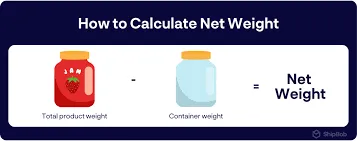
The formula for net weight is:
Net Weight = Gross Weight − Tare Weight
For example, if a sealed box weighs 12 kilograms in total and the empty box and packaging materials weigh 2 kilograms, the net weight of the product inside is 10 kilograms. This net weight represents the actual usable or consumable product.
In many retail environments, digital scales make this process easier by allowing the operator to subtract the tare weight automatically. This function, known as “taring” the scale, ensures that customers are charged only for the product, not the container.
Accurate weight calculation is critical because even small errors can lead to significant financial losses over time. In shipping, incorrect gross weight can result in overloaded vehicles or regulatory penalties. In retail, inaccurate net weight can cause customer complaints or legal action.
By applying the correct formulas and measurement practices, businesses can maintain transparency, comply with regulations, and build trust with customers and partners.
Gross Weight vs Net Weight in Shipping and Logistics
In the shipping and logistics industry, understanding the difference between gross weight and net weight is essential for safety, cost calculation, and legal compliance. Transportation systems—whether by road, sea, rail, or air—must account for the total load being carried, which is why gross weight is the primary measurement used.
Gross weight determines freight charges, vehicle load limits, and stacking requirements. Trucks, ships, and aircraft are designed to carry a maximum allowable weight, and exceeding these limits can lead to accidents, equipment damage, or fines. This is why carriers require accurate gross weight data before accepting shipments.
Net weight, while less critical for transport safety, is still important for documentation and inventory control. Customs authorities often require both gross and net weight details to verify cargo contents, assess duties, and prevent fraud. In international trade, these figures appear on documents such as bills of lading, airway bills, and customs declarations.
Packaging materials, pallets, and containers can significantly increase total shipment weight. For example, a shipment of bottled beverages may have a relatively low net weight compared to its gross weight due to heavy glass bottles and wooden pallets. Ignoring this difference can lead to miscalculated shipping costs and logistical delays.
Accurate weight reporting also supports supply chain efficiency. Warehouses rely on gross weight for storage planning and equipment selection, while net weight helps track actual product movement. Together, these measurements ensure smooth operations from manufacturer to end customer.
Understanding how gross and net weight function in logistics helps businesses avoid costly mistakes and maintain compliance with transportation regulations.
Gross Weight vs Net Weight on Product Labels
When shopping for everyday items, especially food and beverages, consumers most often encounter net weight rather than gross weight. This is because net weight represents the actual quantity of product being sold, excluding all packaging. Most consumer protection laws require manufacturers to display net weight clearly on product labels to ensure transparency and fair pricing.
For example, a packet of sugar labeled “Net Weight: 1 kg” means the sugar itself weighs one kilogram, regardless of how heavy or light the packaging is. This allows consumers to compare products accurately, even when packaging sizes or materials differ. Without net weight labeling, it would be difficult to determine which product offers better value.
Gross weight, however, is rarely shown on retail labels because it includes packaging that consumers do not purchase as part of the product’s value. Gross weight is mainly relevant behind the scenes, such as during transportation, storage, and distribution. Retailers and distributors rely on gross weight for handling and inventory logistics rather than consumer decision-making.
In some cases, especially for bulk goods or industrial products, both gross and net weights may appear on labels. This is common in wholesale markets, chemical products, or construction materials where packaging weight significantly affects handling and transport.
Understanding the difference helps consumers avoid confusion and protects them from misleading packaging. Manufacturers, on the other hand, must ensure accurate net weight labeling to comply with regulations and maintain trust. Incorrect labeling can result in fines, recalls, or damage to brand reputation.
By focusing on net weight for buyers and gross weight for logistics, product labeling balances fairness and practicality.
Gross Weight vs Net Weight in Manufacturing and International Trade
In manufacturing and international trade, gross weight and net weight serve different but equally important purposes. Manufacturers rely heavily on net weight to measure raw materials, control production quantities, and calculate costs accurately. Since net weight represents only the usable material, it helps ensure consistency in product quality and efficient resource management.
For example, in food processing or chemical manufacturing, precise net weight measurements are essential to maintain formulas, meet safety standards, and avoid waste. Even small deviations in net weight can affect product performance or regulatory compliance. As a result, manufacturers often use automated systems to measure and verify net weight throughout the production process.
Gross weight, on the other hand, becomes more relevant once products are packaged and prepared for distribution. Warehouses use gross weight to determine storage capacity, stacking limits, and equipment requirements such as forklifts or conveyor systems. In export operations, gross weight is critical for booking cargo space and complying with transportation regulations.
In international trade, both weights are required for customs clearance. Authorities use net weight to assess product quantity and calculate duties, while gross weight helps verify total cargo load and ensure safe transport. Incorrect weight declarations can lead to shipment delays, penalties, or even seizure of goods.
Packaging choices also play a strategic role. Heavier packaging increases gross weight, which can raise shipping costs without adding product value. As a result, many businesses aim to optimize packaging to reduce gross weight while maintaining product protection.
Understanding how gross and net weight function across manufacturing and trade allows businesses to improve efficiency, reduce costs, and remain compliant with global regulations.
Common Mistakes and Misunderstandings
Despite their widespread use, gross weight and net weight are often misunderstood, leading to costly errors in both consumer and business settings. One of the most common mistakes is assuming that gross weight represents the actual amount of product. In reality, gross weight always includes packaging, which means it does not reflect the true quantity being purchased or consumed.
Another frequent misunderstanding is ignoring tare weight altogether. Many people forget that packaging weight must be subtracted to determine net weight accurately. This is especially problematic in shipping and warehousing, where heavy containers or pallets can significantly distort calculations if tare weight is not considered.
Consumers sometimes believe that a larger package automatically contains more product. This misconception is driven by packaging design rather than actual content. Net weight labeling exists specifically to prevent this type of confusion and ensure fair product comparison.
In logistics, incorrect weight reporting is a serious issue. Declaring net weight instead of gross weight on shipping documents can result in overloaded vehicles, safety hazards, or regulatory penalties. Similarly, underreporting gross weight to reduce shipping costs can lead to fines or rejected shipments.
Manufacturers may also make mistakes by using inconsistent weight measurements across departments. If production uses net weight while logistics relies on gross weight without proper coordination, inventory discrepancies can occur.
These misunderstandings highlight the importance of clear definitions, proper training, and standardized measurement practices. By understanding the distinct roles of gross weight, net weight, and tare weight, individuals and businesses can avoid errors, reduce costs, and ensure compliance with regulations.
When to Use Gross Weight vs Net Weight
Knowing when to use gross weight versus net weight is essential for accuracy, efficiency, and fairness across different situations. Each measurement serves a specific purpose, and using the wrong one can lead to confusion or financial loss.
Gross weight should be used whenever transportation, storage, or handling is involved. Logistics companies, warehouses, and freight carriers rely on gross weight to determine load limits, select appropriate vehicles, and calculate shipping costs. Safety regulations are also based on gross weight, since vehicles must carry the total load, including packaging and containers. For these reasons, gross weight is the standard measurement in shipping and logistics.
Net weight is the correct measurement when determining product value, pricing, or consumption. Consumers rely on net weight to know how much product they are buying, while manufacturers use it to control production quantities and maintain consistency. Net weight is also critical for regulatory compliance in food, pharmaceuticals, and retail industries, where accurate labeling is required by law.
In business operations, both measurements often work together. For example, a company may price its product based on net weight but calculate shipping costs based on gross weight. Understanding this distinction helps businesses optimize packaging, reduce unnecessary shipping expenses, and maintain transparency with customers.
In everyday life, checking net weight helps consumers make better purchasing decisions, while professionals use gross weight to ensure safe and efficient transport. Using each measurement in the right context ensures accuracy, compliance, and trust.
Real-Life Examples of Gross Weight and Net Weight
To fully understand gross weight vs net weight, it helps to look at practical, real-world examples. These examples illustrate how each measurement is applied across industries and daily life.
Example 1: Grocery Shopping
Imagine buying a bag of rice. The net weight—the rice itself—might be 1 kilogram, while the gross weight, including the plastic bag and cardboard packaging, might be 1.1 kilograms. Retailers display net weight on the label so customers know exactly how much rice they are purchasing, while gross weight is only relevant behind the scenes for storage and transport.
Example 2: Shipping Industry
Consider a pallet of bottled beverages. Each bottle contains 500 ml of liquid (net weight), but the packaging, caps, and the pallet itself add substantial weight. If the pallet weighs 600 kilograms in total, that is the gross weight, used to determine shipping costs, truck load limits, and safety compliance.
Example 3: Manufacturing
In a candy factory, raw sugar is measured by net weight to ensure consistent recipes. The packaging of the candies is calculated separately as tare weight, and gross weight determines how many boxes can fit in a shipping container.
Example 4: International Trade
For exported goods, customs documents require both net and gross weight. Net weight helps determine duties based on the product quantity, while gross weight ensures transport safety and compliance with load regulations.
These examples show how gross weight, net weight, and tare weight are interrelated and crucial in everyday life, logistics, manufacturing, and trade. Understanding these differences prevents errors, ensures fair pricing, and supports safe transport.
Frequently Asked Questions (FAQs) About Gross Weight and Net Weight
1. Is net weight always less than gross weight?
Yes. Net weight excludes all packaging, containers, or pallets, while gross weight includes them. Therefore, gross weight is always equal to or greater than net weight.
2. Why is tare weight important?
Tare weight represents the weight of packaging or containers alone. Subtracting tare weight from gross weight allows businesses and consumers to determine the net weight, ensuring accurate billing, fair pricing, and proper inventory management.
3. Which weight is used to calculate shipping costs?
Shipping costs are generally based on gross weight, because transportation depends on the total load being carried. Carriers need to account for both the product and its packaging to ensure safety and compliance with weight regulations.
4. Does net weight change after packaging?
No, net weight refers strictly to the product itself and does not include packaging. However, gross weight can change depending on the type or amount of packaging used.
5. Why do food labels show net weight instead of gross weight?
Net weight gives consumers an accurate measurement of the actual product they are buying, allowing for fair price comparisons. Gross weight is mostly relevant for shipping, handling, and logistics, not consumer purchasing decisions.
6. Can gross, net, and tare weights be used together?
Absolutely. Using all three measurements ensures accuracy across manufacturing, retail, and logistics operations. Gross weight handles transport, net weight handles product value, and tare weight bridges the two.
These FAQs clarify common misunderstandings and help both consumers and professionals use weight measurements accurately in everyday and business contexts.

I’m Oscar Wilde, the Joke Master at JokeDrops.com. With a flair for wit and a love for clever humor, I turn ordinary moments into laughter worth sharing!