
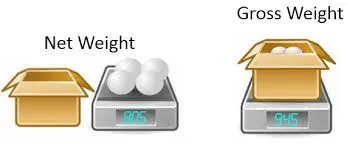
Understanding the difference between net weight and gross weight is essential for anyone dealing with products, shipping, or inventory.
While these terms may seem similar, they represent different measurements that can impact pricing, shipping costs, and legal compliance.
Net weight refers to the actual weight of the product itself, excluding any packaging or containers.
In contrast, gross weight includes the weight of the product plus all packaging, boxes, and containers.
Confusing these two can lead to mistakes in billing, shipping, or even compliance with regulations.
From food labels to cargo shipments, knowing how to distinguish net and gross weight ensures accuracy and transparency.
This guide will break down the definitions, formulas, examples, and practical uses of both, helping you confidently calculate and interpret product weights in everyday situations.
By the end, you’ll never mix up net weight and gross weight again.
What Is Net Weight?
Net weight is the weight of a product alone, excluding any packaging, containers, or additional materials. It represents the actual content that a consumer or business receives. For example, if you buy a bag of rice labeled with a net weight of 1 kilogram, that means you are getting exactly 1 kilogram of rice—not including the bag, box, or any other packaging.
Net weight is commonly used in food products, pharmaceuticals, chemicals, and retail items where precise measurement of the product itself is crucial. It allows consumers and businesses to know exactly how much of the actual item they are purchasing or handling. Net weight is typically measured in grams, kilograms, ounces, or pounds, depending on the country and the industry standards.
Understanding net weight is also important for pricing, inventory management, and regulatory compliance. For instance, many countries have laws requiring clear net weight labeling on consumer goods to prevent misleading claims. In logistics and manufacturing, accurate net weight helps ensure that production targets, shipping calculations, and cost estimations are precise.
In short, net weight focuses solely on the product itself, giving a clear and accurate representation of its quantity. It is the starting point for calculating shipping costs, packaging requirements, and even nutritional information on labels. Always remember: net weight never includes packaging, containers, or any additional materials—that’s the job of gross weight.
What Is Gross Weight?
Gross weight is the total weight of a product, including the product itself plus all packaging, containers, and any additional materials used to hold or transport it. Unlike net weight, which only measures the actual content, gross weight gives the complete measurement of the product as it will be shipped, handled, or stored.
For example, imagine a box of cereal. The net weight might be 500 grams (the cereal alone), but the gross weight includes the cereal, the bag, and the cardboard box. If the packaging weighs 50 grams, the gross weight becomes 550 grams. This distinction is important for logistics, shipping, and compliance purposes, as carriers, freight companies, and customs officials often rely on gross weight to calculate shipping fees or assess load limits.
Gross weight is widely used in shipping, manufacturing, warehousing, and international trade. It ensures that transport vehicles are not overloaded, that freight costs are calculated accurately, and that products comply with safety regulations. Units of measurement for gross weight are similar to net weight, including kilograms, pounds, and tons, depending on the context.
In essence, gross weight provides a complete picture of the total load, including both the product and the materials that contain it. Understanding gross weight, along with net weight and tare weight, is crucial for accurate billing, transportation, and inventory management. It is the total weight that impacts logistics, shipping decisions, and overall product handling.
Net Weight vs Gross Weight: Key Differences
While net weight and gross weight are related, they serve different purposes and are used in different contexts. The main difference lies in what is included in the measurement. Net weight measures only the product itself, excluding packaging, containers, or any additional materials. In contrast, gross weight measures the total weight, which includes the product plus packaging and containers.
Another key difference is their usage in everyday life and industry. Net weight is primarily used for consumer information, labeling, and pricing, allowing customers to know exactly how much product they are buying. For example, when purchasing canned food or packaged snacks, the net weight tells you the actual content inside. Gross weight, on the other hand, is critical in logistics, shipping, and transportation, where the total weight of the package—including boxes, pallets, and other packaging—is essential for cost calculations, safety regulations, and load management.
The relationship between the two can be summarized with the simple formula:
Gross Weight = Net Weight + Tare Weight
Here, tare weight refers to the weight of all packaging and containers. Understanding this relationship ensures accuracy in shipping, billing, and inventory management.
In summary, net weight focuses on the product itself, while gross weight accounts for the product and its packaging. Confusing the two can lead to shipping errors, incorrect billing, or regulatory issues, making it crucial for consumers, businesses, and logistics professionals to understand the difference.
What Is Tare Weight? (The Missing Link)
Tare weight is the weight of all packaging, containers, or materials used to hold a product, excluding the product itself. It acts as the missing piece when understanding the relationship between net weight and gross weight. Essentially, tare weight is what you subtract from the gross weight to determine the net weight of the product.
For example, consider a jar of honey. The jar itself might weigh 200 grams, while the honey inside weighs 500 grams. Here, the net weight is 500 grams, the tare weight is 200 grams, and the gross weight—the total weight of the jar plus honey—is 700 grams. This clear separation ensures accurate measurement for pricing, shipping, and compliance purposes.
Tare weight is particularly important in shipping, manufacturing, and food industries, where products are frequently sold or transported in containers. Without considering tare weight, businesses may overestimate product quantity, miscalculate shipping costs, or fail to comply with labeling laws.
The formula that connects all three weights is simple but powerful:
Gross Weight = Net Weight + Tare Weight
By understanding tare weight, businesses and consumers can accurately calculate product weights, shipping charges, and storage requirements. It also helps avoid confusion on labels and ensures transparency, making tare weight a crucial factor in logistics, retail, and manufacturing operations.
In short, tare weight bridges the gap between net weight and gross weight, making it a critical component of accurate weight measurement.
Where Net vs Gross Weight Is Used
Understanding the difference between net weight and gross weight is essential across various industries, from everyday consumer products to large-scale shipping and logistics. Knowing which measurement to use ensures accuracy in pricing, compliance, and operational efficiency.
In food and consumer products, net weight is commonly displayed on labels to inform consumers of the actual product they are buying. For instance, a 1-kilogram pack of pasta indicates the net weight, while the gross weight would include the box or bag it comes in. This helps customers compare products and ensures transparency in purchases.
In shipping and logistics, gross weight is critical. Carriers, freight companies, and customs authorities use gross weight to determine shipping costs, load limits, and compliance with transportation regulations. For example, when transporting pallets of goods, the gross weight dictates how many pallets can safely fit in a truck or container.
In manufacturing and warehousing, both net and gross weight are essential. Net weight ensures accurate inventory and production tracking, while gross weight helps plan storage, shipping, and handling of packaged products.
Additionally, in aviation and transportation, gross weight plays a critical role in safety. Aircraft and vehicles have maximum load limits, which include both the product and packaging, making it essential to calculate gross weight accurately.
Overall, whether you are a consumer, business owner, or logistics professional, understanding where and how to use net and gross weight ensures efficiency, safety, and cost accuracy across industries.
Why the Difference Between Net and Gross Weight Matters
The difference between net weight and gross weight is more than just a technicality—it has real-world implications for businesses, consumers, and logistics. Understanding the distinction ensures accuracy in pricing, shipping, regulatory compliance, and customer transparency.
For businesses, knowing the net weight is crucial for pricing products fairly. If only gross weight is considered, the price may appear higher than it should be because it includes packaging, which does not represent the actual product. Similarly, shipping costs are often calculated based on gross weight. Overestimating or underestimating the gross weight can lead to extra charges or financial losses when transporting goods.
Regulatory compliance is another reason the difference matters. Many countries have strict labeling laws that require the net weight to be displayed clearly on consumer goods. Mislabeling products or confusing net and gross weight can result in fines, legal issues, or damaged consumer trust.
For consumers, understanding these terms ensures they know exactly how much product they are purchasing. For example, buying a 1-kilogram bag of snacks doesn’t mean you are receiving 1 kilogram of the edible product—it may include packaging weight, which is only reflected in the gross weight.
In logistics and manufacturing, accurate weight measurements prevent overloading vehicles, miscalculating inventory, or exceeding safety limits, particularly in transportation and shipping industries.
In short, understanding the difference between net and gross weight is essential for cost efficiency, legal compliance, and operational accuracy. Misunderstanding these measurements can have financial, legal, and safety consequences.
Common Mistakes and Misunderstandings
Many people and businesses often confuse net weight and gross weight, leading to mistakes that can affect pricing, shipping, and compliance. One of the most common errors is assuming that net weight and gross weight are the same. While net weight measures only the product, gross weight includes packaging, containers, and any other materials. Ignoring this difference can lead to overpayment in shipping costs or mislabeling products.
Another frequent mistake is overlooking tare weight. Tare weight—the weight of packaging—must be subtracted from gross weight to find net weight. Failing to account for tare weight can create errors in inventory management, shipping calculations, and production planning.
Misreading labels is another common issue. Consumers may see the gross weight listed and assume it represents the actual product quantity, which can cause confusion and disappointment. Similarly, businesses sometimes use gross weight in pricing calculations, inadvertently charging customers for the packaging rather than just the product.
In shipping and logistics, errors often occur when gross weight is incorrectly measured or documented. Overestimating weight can lead to unnecessary shipping charges, while underestimating it can cause overloading, safety risks, or regulatory penalties.
Finally, a subtle but important misunderstanding is failing to recognize industry-specific standards. For instance, food labeling laws may require net weight, while freight companies base charges on gross weight. Knowing which weight to use in each context is crucial to avoid costly mistakes.
Understanding these common pitfalls ensures accuracy, compliance, and cost efficiency across industries and everyday consumer situations.
How to Calculate Net and Gross Weight
Calculating net weight and gross weight is straightforward once you understand the role of tare weight, which represents the packaging or container weight. The basic formulas are:
- Gross Weight = Net Weight + Tare Weight
- Net Weight = Gross Weight − Tare Weight
For example, imagine a box of chocolates. If the net weight of the chocolates is 800 grams and the box weighs 200 grams, the gross weight would be:
Gross Weight = 800 g + 200 g = 1000 g
Conversely, if you know the gross weight and tare weight, you can calculate the net weight. Suppose a shipping crate containing items weighs 50 kilograms in total, and the crate itself weighs 10 kilograms:
Net Weight = 50 kg − 10 kg = 40 kg
These formulas apply across industries: food products, shipping, manufacturing, and aviation. They help businesses ensure accurate pricing, shipping charges, and inventory records.
It’s also important to measure weights accurately using calibrated scales, as small errors in gross or tare weight can lead to discrepancies in net weight calculations. For packaged goods, the tare weight may include boxes, bottles, bags, or pallets, so identifying all components is essential.
By consistently applying these formulas, businesses and consumers can confidently determine product weight, shipping costs, and compliance with regulations, ensuring transparency and efficiency in all operations involving weight measurements.
Net Weight vs Gross Weight on Product Labels
Product labels are one of the most visible places where the difference between net weight and gross weight becomes important. Most consumers are familiar with seeing net weight on food packaging, beverages, or household items. The net weight tells you exactly how much of the product is inside, excluding the packaging, containers, or any extra materials. This ensures transparency and allows customers to make informed purchasing decisions.
Gross weight, while less commonly displayed on consumer labels, is critical in shipping, logistics, and bulk products. For example, a box of cereal may list a net weight of 500 grams, but the gross weight—including the box, plastic wrapping, and protective materials—might be 550 grams. Understanding this difference is especially important for businesses that calculate shipping costs, storage requirements, or transportation fees based on gross weight.
Regulatory bodies in many countries mandate that net weight must be clearly stated on product packaging to avoid misleading consumers. Some regions also require information about drained weight, especially in canned goods, which is a type of net weight measurement.
Consumers should always read the labels carefully. Mistaking gross weight for net weight can lead to confusion about how much product is actually being purchased. Businesses, on the other hand, must ensure accurate labeling to comply with regulations and maintain customer trust.
In short, product labels are the interface where net weight communicates value to the consumer, and gross weight ensures proper logistics and compliance behind the scenes.
Advantages and Disadvantages of Using Net vs Gross Weight
Understanding the advantages and disadvantages of net weight and gross weight helps businesses, consumers, and logistics professionals make better decisions.
Net weight focuses solely on the product itself, which offers several advantages. It provides accuracy in pricing because consumers pay only for the actual product, not the packaging. It also ensures transparency, particularly in food products or consumer goods, helping customers make informed choices. Net weight is essential for inventory management, as businesses can track the actual quantity of products without being misled by packaging weight. However, net weight has limitations. It does not account for packaging, shipping, or handling considerations, which can impact logistics and transportation planning.
Gross weight, on the other hand, includes both the product and its packaging. Its primary advantage is in shipping, transportation, and regulatory compliance. Carriers, freight companies, and customs authorities rely on gross weight to calculate shipping fees and ensure safety regulations are met. Gross weight also helps in preventing vehicle overloading and planning storage or handling needs. The disadvantage of gross weight is that it does not accurately reflect the actual product quantity, which can confuse consumers or impact pricing if used incorrectly.
In practice, using both net and gross weight together provides the most comprehensive approach. Businesses can ensure transparency, accurate pricing, efficient logistics, and compliance with regulations by understanding and applying both measurements appropriately.
Frequently Asked Questions (FAQs) About Net Weight vs Gross Weight
Understanding net weight and gross weight often raises common questions for consumers and businesses alike. Here are answers to some of the most frequently asked questions:
1. What is the difference between net weight and gross weight?
Net weight measures only the product itself, excluding packaging. Gross weight includes the product plus all packaging, containers, or additional materials.
2. Why is gross weight always higher than net weight?
Gross weight includes the tare weight of packaging, so it is naturally higher than net weight. The difference accounts for boxes, bottles, bags, or other materials that hold the product.
3. Which weight affects shipping costs?
Shipping and freight charges are usually based on gross weight, because it represents the total load that carriers handle.
4. Which weight is shown on product labels?
Most consumer goods display net weight on the label to indicate the actual product amount. Gross weight is typically used behind the scenes for logistics and shipping purposes.
5. How do I calculate net weight if I know the gross weight?
Use the formula:
Net Weight = Gross Weight − Tare Weight
This ensures you know the exact product quantity without the packaging.
6. Can net weight ever be higher than gross weight?
No. By definition, gross weight includes the product and packaging, so net weight will always be equal to or less than gross weight.
These FAQs help clarify common confusions, ensuring consumers, businesses, and shippers understand how to measure, calculate, and use net and gross weight correctly.

I’m the Joke Master behind JokeDrops.com. I live to make people laugh with clever puns, funny lines, and daily humor drops. Spreading smiles is my favorite job — one joke at a time!