
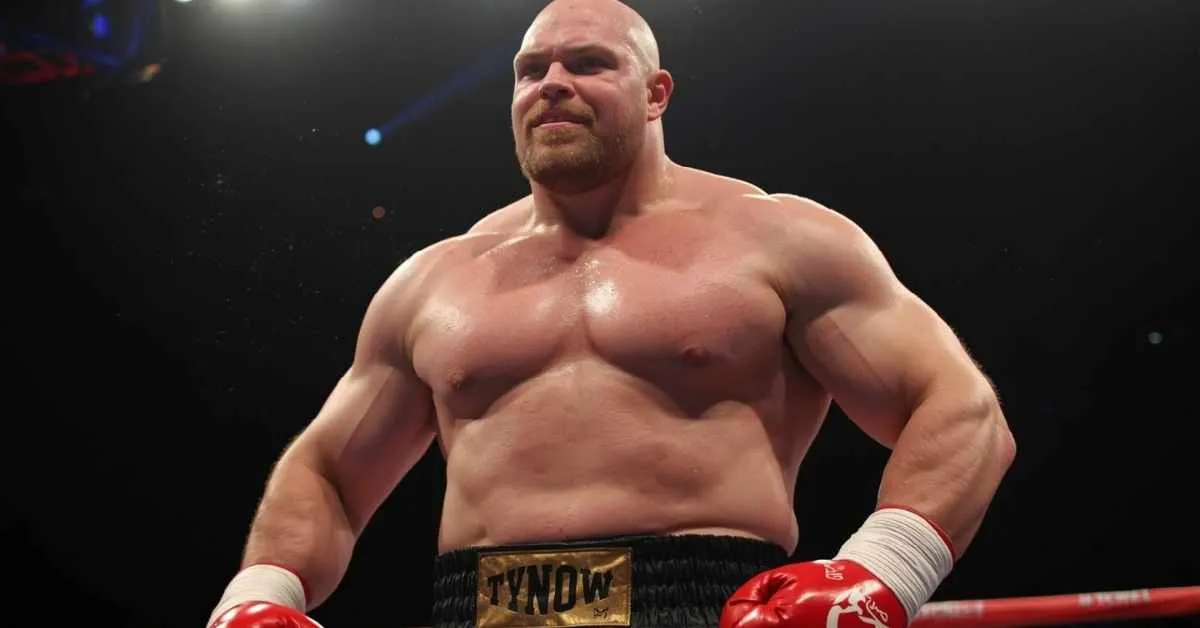
When it comes to heavyweight boxing, few names inspire awe quite like Tyson Fury, famously known as “The Gypsy King.”
Standing tall and commanding in the ring, his height and weight are often the first things fans and analysts notice.
At 6 feet 9 inches (206 cm) with a reach that keeps opponents at bay, Fury’s stature gives him a unique advantage in the heavyweight division.
But it’s not just his height that makes him a formidable force his weight, which fluctuates between 250–270 pounds (113–122 kg) for fights, combines power with surprising agility.
Over the years, Fury has transformed both his body and boxing style, turning his physical attributes into tactical weapons.
In this article, we’ll dive deep into Tyson Fury’s height, weight, training, and comparisons with other heavyweight legends, exploring how his physique has helped him dominate the boxing world and why fans can’t stop talking about it.
Tyson Fury’s Height: A Towering Advantage
One of the first things people notice about Tyson Fury is his remarkable height. Officially standing at 6 feet 9 inches (206 cm), Fury is one of the tallest boxers in modern heavyweight history. His towering presence in the ring isn’t just for show—it gives him a strategic advantage over most opponents. Taller boxers like Fury can maintain distance with long jabs, control the pace of the fight, and make it difficult for shorter fighters to land effective punches.
Fury’s reach, measuring around 85 inches (216 cm), complements his height perfectly. This means he can strike from a distance while keeping opponents outside their optimal range. For comparison, many heavyweight boxers average between 6’2” and 6’5”, making Fury a true giant in the division. His height has played a key role in some of his most notable victories, including bouts against Deontay Wilder and Wladimir Klitschko, where his ability to use range and maintain distance proved decisive.
Interestingly, Fury doesn’t rely solely on his height; he combines it with excellent footwork and defensive skills, making him surprisingly agile for someone of his stature. This combination of height, reach, and mobility allows him to dominate opponents in both offense and defense. It’s no wonder fans and analysts alike frequently cite his towering frame as one of the keys to his success.
Tyson Fury’s Weight: Power Meets Agility
While Tyson Fury’s height makes him an imposing figure, his weight is just as crucial to his dominance in the ring. Fury’s fight weight typically ranges between 250–270 pounds (113–122 kg), depending on the opponent and the timing of the fight. This weight gives him the strength and power needed to deliver knockout punches while maintaining enough agility to move gracefully around the ring—a rare combination for a heavyweight of his size.
Fury’s “walking around” weight outside of training and fight camps is usually higher, sometimes exceeding 300 pounds (136 kg). This flexibility allows him to cut or gain weight strategically before a match, ensuring he enters the ring at peak performance. His ability to fluctuate weight without losing speed or endurance is a testament to his disciplined lifestyle and rigorous training regimen.
The relationship between his weight and performance is fascinating. Too little weight could reduce his punching power, while too much could compromise stamina. Fury has mastered this balance, using his mass to absorb punches and deliver devastating blows without sacrificing mobility.
Over the years, Fury has also undergone dramatic physical transformations. During periods away from the sport, he gained significant weight, only to shed it and regain peak form for major comebacks. His weight management not only highlights his discipline but also underscores the importance of physique in modern heavyweight boxing, where size, strength, and speed must work in harmony.
Tyson Fury’s Body Composition and Physique
Tyson Fury’s extraordinary performance in the ring is not just about height and weight—it’s also about how he carries that weight. Fury’s physique is a unique blend of muscle mass, functional strength, and surprisingly low body fat for a heavyweight. At fight time, he maintains a body composition that maximizes power without compromising agility, allowing him to move fluidly despite his 6’9” frame and 250–270 pounds of mass.
Unlike many heavyweights who rely solely on brute strength, Fury’s body is built for endurance and flexibility. His core strength and leg power are essential for maintaining balance while delivering heavy punches or absorbing blows from opponents. Even during his off-season, Fury’s body can handle significant fluctuations in weight, yet he always returns to a leaner, fight-ready condition through a combination of strength training, boxing drills, and cardio exercises.
Fury’s trainers have often praised his natural athleticism, noting that his height and long limbs make him a unique challenge for opponents. His long reach and tall frame are complemented by coordinated muscle distribution, enabling him to throw powerful hooks and uppercuts without losing speed. Additionally, his physique allows him to adopt multiple boxing styles—sometimes moving like a conventional heavyweight, other times relying on agility and footwork to outmaneuver opponents.
Overall, Tyson Fury’s body composition is a perfect example of how modern heavyweight boxing requires more than just size. It’s a careful balance of muscle, speed, endurance, and strategy, all of which Fury uses to dominate the ring.
Tyson Fury’s Training, Diet, and Lifestyle
Tyson Fury’s impressive height, weight, and physique are the result of more than natural genetics—they are meticulously maintained through rigorous training, diet, and lifestyle choices. To stay fight-ready, Fury follows a combination of boxing-specific drills, strength training, and cardiovascular exercises. His workouts include sparring, heavy bag sessions, agility drills, and core-strength routines, all designed to maintain power, endurance, and mobility despite his massive frame.
Diet is another key factor. Fury consumes a high-calorie, protein-rich diet to fuel his training and support muscle growth. Meals typically include lean meats, eggs, whole grains, vegetables, and healthy fats, along with supplements for recovery and energy. During weight-cutting periods, he carefully adjusts his caloric intake to shed excess pounds while retaining strength and stamina, demonstrating remarkable discipline and body awareness.
Lifestyle habits also contribute to his performance. Fury emphasizes rest, recovery, and mental preparation, ensuring his body and mind are synchronized for peak performance. Even during off-seasons, when his weight may increase significantly, he gradually returns to fight shape without compromising health.
Fury’s approach highlights how modern heavyweight boxing demands more than sheer size. Success comes from balancing nutrition, exercise, and lifestyle while strategically managing weight. His ability to transform physically and maintain agility, endurance, and power is a testament to his dedication, making him one of the most well-prepared and physically remarkable boxers in the world.
Height and Weight’s Role in Boxing Performance
Tyson Fury’s height and weight aren’t just numbers—they are essential tools that shape his boxing style and strategy. Standing at 6’9” with a reach of 85 inches and a fight weight around 250–270 pounds, Fury can control distance, dictate the pace of a fight, and leverage his mass to deliver powerful punches. His height allows him to keep opponents at bay with a sharp jab, while his long arms enable him to strike from angles that shorter fighters often struggle to reach.
Weight plays an equally important role. At the right fight weight, Fury combines strength and endurance, allowing him to absorb hits, push through heavy exchanges, and maintain mobility throughout 12-round bouts. Unlike some heavyweights who rely solely on brute force, Fury uses his size intelligently—his weight adds punching power, but he keeps it evenly distributed so it doesn’t compromise speed or agility.
Fury’s strategic use of height and weight has been evident in key fights. Against Deontay Wilder, his ability to move and use reach effectively frustrated Wilder’s aggressive style. Similarly, Fury’s combination of size, agility, and tactical intelligence helped him dominate Wladimir Klitschko, neutralizing the power of an equally strong opponent.
In essence, Fury’s physique is not just for intimidation—it’s a finely tuned advantage. By balancing height, reach, weight, and mobility, he can adapt to different opponents, control fights from start to finish, and remain one of the most formidable heavyweights in boxing history.
Tyson Fury vs Other Heavyweights: How He Stacks Up
When it comes to comparing Tyson Fury with other top heavyweights, his height and weight often give him a clear edge. Fury’s 6’9” frame and 250–270-pound fight weight make him taller than most rivals in the division. For instance, Anthony Joshua, another elite heavyweight, stands at 6’6” and usually weighs around 240–250 pounds for fights, while Deontay Wilder is slightly shorter at 6’7” but can weigh 214–231 pounds, depending on the bout. These differences may seem small on paper, but in the ring, Fury’s height and reach allow him to maintain distance and control engagements, keeping shorter opponents on the defensive.
Beyond height and weight, Fury’s reach advantage—approximately 85 inches—enhances his ability to land jabs from range while avoiding counterattacks. His size also contributes to his versatility, enabling him to switch between offensive pressure and defensive maneuvering seamlessly. Compared to other heavyweights, Fury combines the mass needed for power with the agility often associated with lighter fighters, giving him a rare balance of size and speed.
Even among historically large heavyweights like Wladimir Klitschko (6’6”) or Lennox Lewis (6’5”), Fury’s towering presence stands out. While others rely heavily on strength or technical skill, Fury’s combination of height, weight, reach, and movement makes him uniquely difficult to challenge. This comparative advantage helps explain why he has consistently dominated the heavyweight division and continues to be a fan favorite.
Fun Facts About Tyson Fury’s Size and Physique
Tyson Fury isn’t just a boxing champion—he’s also a larger-than-life figure in every sense of the word. Standing at 6’9” (206 cm) with a reach of 85 inches (216 cm), Fury is often one of the tallest fighters in the heavyweight division. Fans love comparing him to other boxers, noting that his frame makes him look almost like a giant next to opponents like Deontay Wilder or Anthony Joshua.
One fun fact: Fury is sometimes referred to as the “Big Friendly Giant” because, despite his intimidating size, he’s known for his humor and charisma outside the ring. Another interesting point is that his long arms give him a reach advantage that’s nearly impossible for most fighters to match, allowing him to control fights from a distance while keeping opponents at bay.
Fury’s physique has also been the subject of incredible transformations. He has gained and lost over 100 pounds at different points in his career, demonstrating remarkable discipline and the ability to adapt his body for maximum performance. During his comeback before the Wilder fights, Fury shed significant weight and regained muscle tone, showing the world that size isn’t just about bulk—it’s about strategic conditioning.
Fans also marvel at his agility, which seems almost unnatural for someone of his stature. His ability to move, dodge, and pivot like a much smaller fighter has earned him comparisons to boxers half his size, proving that Fury’s height and weight aren’t just for show—they are a key part of his success in the ring.
Health Considerations: Managing Height and Weight in Boxing
Maintaining peak performance at Tyson Fury’s size requires careful attention to health, fitness, and recovery. At 6’9” and weighing 250–270 pounds during fights, Fury’s body undergoes tremendous stress, from rigorous training sessions to the physical demands of competing at the highest level of heavyweight boxing. Managing such a large frame safely is crucial to avoid injuries, maintain stamina, and ensure long-term career longevity.
One important factor is weight management. Fury’s “walking around” weight can exceed 300 pounds during off-seasons, but he strategically sheds pounds to enter fights at optimal strength and agility. Rapid or excessive weight changes in heavyweights can increase the risk of heart strain, joint problems, and fatigue. Fury mitigates these risks with structured nutrition plans, including high-protein meals, balanced carbohydrates, and healthy fats, along with monitored hydration and supplements to support recovery.
Strength and conditioning training also play a key role in injury prevention. Core exercises, leg strengthening, and flexibility routines ensure that Fury can move efficiently despite his height and mass, reducing the likelihood of muscle strains and joint issues.
Finally, mental and physical recovery is vital. Adequate rest, sleep, and stress management allow Fury to maintain focus, reflexes, and endurance. His approach demonstrates that in modern heavyweight boxing, careful attention to health is as critical as raw height or weight, ensuring fighters like Fury can compete safely and effectively at the top level.
Tyson Fury’s Future Outlook: Height and Weight in Upcoming Fights
Looking ahead, Tyson Fury’s height and weight will continue to play a critical role in his success as a heavyweight champion. Standing at 6’9” with a reach of 85 inches and maintaining a fight weight around 250–270 pounds, Fury has a unique physical profile that few opponents can match. As he faces the next generation of heavyweights, his combination of size, agility, and tactical intelligence will remain a significant advantage in the ring.
Fury has already demonstrated that he can adapt his body to meet different challenges. Even after periods away from boxing, during which he has gained substantial weight, he has consistently returned to fight-ready form through disciplined training, diet, and conditioning. This adaptability will be crucial as he prepares for younger, faster, or similarly sized opponents, where subtle changes in weight or mobility can make the difference between victory and defeat.
Additionally, Fury’s strategic use of height and reach allows him to control the pace and distance of fights, forcing opponents to adjust their style or risk being outmatched. Maintaining an optimal balance of strength, endurance, and flexibility will ensure he can continue to dominate.
As Fury advances in his career, fans can expect him to leverage his towering frame intelligently, combining his natural physical advantages with refined technique and experience. His height and weight will not only define his presence in the ring but also shape the future of heavyweight boxing for years to come.
Conclusion: How Tyson Fury’s Height and Weight Define His Legacy
Tyson Fury’s remarkable height and weight are more than just impressive statistics—they are central to his identity as one of the greatest heavyweights of his generation. Standing at 6’9” (206 cm) with a reach of 85 inches and a fight weight that typically ranges between 250–270 pounds (113–122 kg), Fury combines size, power, and agility in a way that few boxers can match. His towering presence allows him to control distance, dominate exchanges, and use his reach advantage to keep opponents on the defensive.
Fury’s physique has also enabled dramatic transformations throughout his career. From periods of increased off-season weight to disciplined weight management before major bouts, he has demonstrated that maintaining optimal height-to-weight balance is essential for both performance and longevity. His combination of natural size, strategic training, and precise weight control makes him agile, resilient, and powerful, highlighting the importance of physical conditioning in modern heavyweight boxing.
When compared to other top heavyweights like Anthony Joshua, Deontay Wilder, and Wladimir Klitschko, Fury’s size consistently gives him a tactical edge, whether through reach, power, or endurance. Beyond the numbers, his height and weight contribute to his larger-than-life persona, inspiring fans and intimidating opponents alike.
Ultimately, Tyson Fury proves that success in the heavyweight division is as much about how you use your body as how big you are. His height and weight are not just statistics—they are instruments of strategy, power, and boxing excellence, defining his legacy in the sport.

I’m Oscar Wilde, the Joke Master at JokeDrops.com. With a flair for wit and a love for clever humor, I turn ordinary moments into laughter worth sharing!