
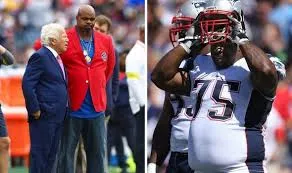
Vince Wilfork is widely regarded as one of the most dominant defensive tackles in NFL history, and a big part of his success came down to his size and weight.
Listed at around 325–350 pounds during his prime, Wilfork’s combination of mass, strength, and agility allowed him to control the line of scrimmage and make life difficult for opposing quarterbacks and running backs.
Fans often wonder about Vince Wilfork’s weight and how it evolved throughout his career, as well as how he maintained such a powerful physique while staying agile on the field.
From his early days at the University of Miami to his 14-year NFL career with the New England Patriots and Houston Texans, Wilfork’s size was a defining characteristic of his play style.
In this article, we’ll explore Vince Wilfork’s weight, height, training routines, and how his physical stats contributed to his legendary football career.
Early Life and Physical Development
Vince Wilfork was born on November 4, 1981, in Boynton Beach, Florida, where he began developing the size and athleticism that would later define his NFL career. From a young age, Wilfork stood out on the football field, showcasing a natural combination of strength and agility that made him a formidable presence even in high school. Playing at Boynton Beach High School, he quickly earned recognition for his ability to dominate opponents in both the running and passing game, largely due to his impressive build.
Wilfork’s weight and physical development continued to progress as he moved on to college football at the University of Miami, a program known for producing elite NFL talent. During his time with the Hurricanes, he refined his size, strength, and technique, preparing for the professional level. Coaches noted his ability to maintain agility despite his heavy frame, a trait that would become a hallmark of his career.
By the time he entered the NFL, Wilfork’s weight ranged around 325–330 pounds, paired with a height of 6 feet 2 inches, giving him the perfect blend of mass and mobility for a defensive tackle. His early life and disciplined physical development laid the foundation for a career where his size and skill would intimidate even the most accomplished offensive linemen, establishing him as one of the most dominant players of his era.
NFL Career Overview
Vince Wilfork was drafted in the first round of the 2004 NFL Draft by the New England Patriots, a team that would become synonymous with his legendary career. Over 11 seasons with the Patriots, Wilfork quickly established himself as one of the most dominant defensive tackles in the league. Standing at 6 feet 2 inches and weighing around 325–350 pounds, his size alone made him a force on the defensive line, but it was his combination of strength, agility, and football intelligence that truly set him apart.
Wilfork’s career highlights include five Pro Bowl selections and two Super Bowl championships, achievements that reflect both his skill and his impact on the field. He was known for clogging running lanes, collapsing the pocket, and consistently drawing double teams, which allowed his teammates to make big plays. His weight and physical presence played a crucial role in these contributions, as offensive linemen often struggled to move him despite their own size and strength.
In 2015, Wilfork joined the Houston Texans for the final two seasons of his NFL career, continuing to bring veteran leadership and formidable size to their defensive front. Over 14 seasons, he amassed impressive statistics, including over 500 tackles, 27 sacks, and numerous forced fumbles, underscoring how his physical stature translated into measurable performance. Wilfork’s career demonstrates how maintaining an optimal weight and combining it with skill can make a defensive tackle an unstoppable force in professional football.
Vince Wilfork’s Weight Throughout His Career
Vince Wilfork’s weight was one of the most talked-about aspects of his football career, and for good reason. Listed at 325–350 pounds during his prime, Wilfork’s size was ideal for a defensive tackle, giving him the mass needed to dominate the line of scrimmage while still maintaining surprising agility. Throughout his 14-year NFL career, his weight remained relatively consistent, a testament to his disciplined training and nutrition regimen.
Early in his rookie season with the New England Patriots, Wilfork weighed approximately 325 pounds, already enough to overpower most offensive linemen. As he progressed into the middle of his career, he bulked up slightly, reaching around 340 pounds at his peak. This increase allowed him to anchor the defensive line even more effectively, particularly against powerful running attacks. However, Wilfork carefully managed his weight to avoid losing mobility, ensuring he could still chase quarterbacks, drop into short zones, and make tackles in open space.
Even toward the end of his career with the Houston Texans, Wilfork maintained a playing weight around 335–340 pounds, demonstrating that he could sustain a large frame without sacrificing performance. Compared to the average NFL defensive tackle, who typically weighs around 310–320 pounds, Wilfork’s size gave him a distinct advantage. His weight was more than just a number; it was a strategic tool that contributed to his dominance, durability, and ability to change the dynamics of every game he played.
Training, Diet, and Conditioning
Maintaining a playing weight of 325–350 pounds while staying agile and explosive requires intense dedication, and Vince Wilfork’s training and diet routines were a major factor in his success. Known for his disciplined approach, Wilfork combined strength training, conditioning drills, and proper nutrition to ensure his size translated into on-field performance rather than slowing him down.
In the weight room, Wilfork focused on building functional strength rather than just mass. His workouts included compound lifts like squats, deadlifts, and bench presses, which helped him generate the power necessary to push offensive linemen backward and control running lanes. He also incorporated agility drills, sled pushes, and lateral movements to maintain quickness and mobility, critical for a defensive tackle tasked with chasing quarterbacks and making tackles in space.
Nutrition played an equally important role in sustaining his size. Wilfork followed a high-protein, balanced diet to fuel his intense workouts and support muscle recovery. While specific details of his diet varied over the years, it consistently focused on lean meats, complex carbohydrates, vegetables, and adequate hydration to maintain his optimal playing weight.
Off-season conditioning allowed Wilfork to experiment with slight changes in weight, either adding mass for strength or trimming down slightly to enhance speed and endurance. This careful balance of training, diet, and recovery ensured that his weight was always an asset, making him a dominant presence on the defensive line throughout his 14-year NFL career.
Impact of His Weight on Gameplay
Vince Wilfork’s weight was not just a number on a roster—it was a defining factor in how he dominated games. At 325–350 pounds, he had the perfect combination of mass and strength to control the line of scrimmage, clog running lanes, and disrupt offensive plays. Offensive linemen often struggled to move him, forcing double teams that opened opportunities for his teammates to make big plays. This ability to command attention made him one of the most effective defensive tackles of his era.
Wilfork’s size allowed him to excel in multiple defensive schemes, from the 3-4 formation, where he could anchor the middle, to the 4-3 alignment, where he had more freedom to penetrate gaps. His mass enabled him to absorb contact while remaining balanced, giving quarterbacks less time to throw and running backs fewer options for gaining yards. Beyond raw strength, his agility at that weight was remarkable; Wilfork could disengage from blockers, pursue ball carriers, and even drop into short coverage zones when needed.
Several memorable games demonstrate the impact of his weight. In playoff matchups, his presence in the trenches often dictated the flow of the game, making it difficult for elite offenses to execute their plans. Teammates frequently noted that just seeing Wilfork lined up at the snap was intimidating, showing that his physical stature combined with skill created both a psychological and tactical advantage on the field.
Comparisons With Other NFL Players
Vince Wilfork’s size and dominance stand out even when compared to other top defensive tackles of his era. At 325–350 pounds and 6 feet 2 inches, he had a combination of mass, strength, and agility that few could match. Players like Ndamukong Suh, Haloti Ngata, and Aaron Donald are often compared to Wilfork in discussions about elite interior linemen, but Wilfork’s unique balance of size and mobility set him apart.
Many defensive tackles relied on speed or raw power, but Wilfork combined both in a way that allowed him to control offensive lines while still pursuing plays across the field. For example, Haloti Ngata, known for brute strength, often relied on overpowering blockers, whereas Wilfork could absorb contact, shed double teams, and make plays in open space. Similarly, Ndamukong Suh, slightly lighter and faster, emphasized penetration and disruption, but Wilfork’s presence often demanded multiple blockers, allowing his teammates to exploit gaps.
Compared to the average NFL defensive tackle, who typically weighs around 310–320 pounds, Wilfork had a clear advantage in terms of size without sacrificing agility. His ability to maintain such a large frame throughout a 14-year career, while staying effective in both run and pass defense, highlights why he is often regarded as one of the best defensive tackles of all time. Wilfork’s weight and playing style were not just stats—they were tools that shaped games and influenced how opposing teams strategized against him.
:
Injuries and Longevity
Maintaining a playing weight of 325–350 pounds over a 14-year NFL career is no small feat, and Vince Wilfork’s durability speaks volumes about his discipline and physical preparation. While larger players often face increased risk of joint stress and injuries, Wilfork managed to sustain peak performance thanks to careful conditioning, weight management, and recovery routines.
Throughout his career, Wilfork experienced the typical bumps and bruises of a defensive lineman, including minor knee and shoulder issues, but he rarely missed significant time due to injury. His weight, while giving him immense power and presence on the field, was balanced with agility and core strength, reducing the impact on his joints. Strengthening exercises, mobility routines, and proper nutrition all contributed to his ability to stay healthy despite the physical demands of his position.
Wilfork’s longevity allowed him to play 11 seasons with the Patriots and two with the Texans, maintaining a consistently high level of play. His ability to hold his weight within an optimal range meant he could sustain the physicality required to control offensive lines without burning out prematurely. In many ways, his combination of size, technique, and durability became a blueprint for aspiring defensive tackles aiming for long, successful careers. Wilfork’s career demonstrates that with careful management, even a player of extraordinary mass can thrive in the NFL for over a decade.
Legacy and Influence
Vince Wilfork’s legacy in the NFL goes far beyond his impressive statistics and physical presence. Standing 6 feet 2 inches and weighing between 325–350 pounds, he redefined what it meant to be a dominant defensive tackle, blending mass, strength, and surprising agility. His ability to control the line of scrimmage influenced how coaches built defensive schemes and how future players approached the position.
Wilfork’s impact can be seen in both his team’s successes and in the players who followed in his footsteps. His five Pro Bowl selections and two Super Bowl championships highlight his consistent excellence and contribution to championship-level teams. Younger defensive tackles often cite Wilfork as a model for combining size with technique, demonstrating that raw weight alone isn’t enough—mobility, football intelligence, and conditioning are equally critical.
Off the field, Wilfork’s dedication to maintaining his playing weight and conditioning has inspired athletes at all levels. He demonstrated that a large frame could be an asset rather than a limitation, encouraging players to focus on strength, agility, and discipline. His presence also left a lasting impression on fans and opponents alike, with many remembering the psychological advantage his size and skill brought to every game.
Ultimately, Vince Wilfork’s influence extends beyond individual stats. His career showed that weight, when managed strategically, can be a powerful tool in football, cementing him as one of the most respected and influential defensive tackles in NFL history.
Fun Facts & Lesser-Known Details
Beyond his remarkable weight and NFL dominance, Vince Wilfork has plenty of fun facts and lesser-known details that highlight both his personality and dedication as an athlete. Despite weighing between 325–350 pounds, Wilfork was surprisingly agile, able to make plays across the field that many smaller players could not. His combination of size and athleticism often surprised opponents, earning him a reputation as one of the most formidable defensive tackles in football history.
Off the field, Wilfork has been known for his approachable personality and sense of humor, making him a fan favorite in both New England and Houston. He frequently participated in charity events and community programs, using his fame to give back to those in need. His disciplined lifestyle also extended beyond football; even during the off-season, Wilfork maintained a routine that allowed him to stay in peak condition, emphasizing the importance of nutrition, rest, and recovery.
Another interesting fact is that Wilfork’s listed weight sometimes fluctuated slightly depending on the season, as he adjusted to balance strength, mobility, and endurance. This attention to detail reflects his professional mindset, understanding that even small changes in weight could impact performance. Additionally, his size often intimidated opponents before the first snap, creating a psychological advantage for his team.
These lesser-known details show that Wilfork’s impact wasn’t limited to his stats. His discipline, personality, and strategic use of weight contributed to a career that remains legendary among NFL fans and aspiring athletes alike.
Conclusion
Vince Wilfork’s career is a testament to how size, when combined with skill, discipline, and intelligence, can define a player’s legacy in the NFL. Standing 6 feet 2 inches and weighing between 325–350 pounds, Wilfork used his mass not just as a physical advantage but as a strategic tool on the field. His weight allowed him to dominate the line of scrimmage, control running lanes, and force opposing teams to adjust their game plans.
Throughout his 14-year career, Wilfork demonstrated that maintaining an optimal playing weight requires more than just genetics—it demands a careful balance of training, diet, conditioning, and recovery. His ability to sustain such a large frame while remaining agile and effective speaks to his work ethic and commitment to excellence. From his early days at the University of Miami to his years with the New England Patriots and Houston Texans, his size was always paired with intelligence, technique, and a relentless drive to win.
Wilfork’s legacy extends beyond statistics and accolades. He influenced how future defensive tackles approached the game, showing that a combination of weight, strength, and mobility can elevate a player’s performance. Off the field, his professionalism and community involvement further enhanced his reputation, proving that greatness in football encompasses both skill and character.
Ultimately, Vince Wilfork’s weight was more than a number—it was a defining element of one of the most respected and dominant careers in NFL history, leaving an enduring impact on the sport and inspiring athletes for generations to come.
FAQ & Stats: Vince Wilfork Weight and Career
Q1: What was Vince Wilfork’s playing weight?
Vince Wilfork’s listed weight during his NFL career ranged between 325 and 350 pounds, depending on the season and training adjustments. This size allowed him to dominate the defensive line while maintaining agility.
Q2: How tall was Vince Wilfork?
Wilfork stood 6 feet 2 inches tall, giving him a compact, powerful frame ideal for a defensive tackle. His height and weight combination made him extremely difficult for offensive linemen to move.
Q3: Did Vince Wilfork’s weight change over his career?
Yes, Wilfork’s weight fluctuated slightly, generally increasing from around 325 pounds as a rookie to about 340 pounds at his peak. He carefully managed his weight to balance strength, endurance, and mobility.
Q4: How did Wilfork’s weight impact his gameplay?
His mass allowed him to clog running lanes, draw double teams, and create opportunities for teammates. It also provided a psychological advantage, intimidating opponents before the snap.
Q5: How does Wilfork compare to other NFL defensive tackles?
While many defensive tackles weigh 310–320 pounds, Wilfork’s combination of 325–350 pounds with agility made him stand out among peers like Ndamukong Suh and Haloti Ngata.
Career Stats Snapshot:
- Tackles: 512
- Sacks: 27
- Forced Fumbles: 9
- Pro Bowls: 5
- Super Bowl Wins: 2

I’m Oscar Wilde, the Joke Master at JokeDrops.com. With a flair for wit and a love for clever humor, I turn ordinary moments into laughter worth sharing!