
If you’ve ever been scrolling through social media and suddenly seen someone comment “you reap what you sow,” you might have paused for a second wondering what it really means.
It sounds poetic, almost like something from a movie or a motivational quote page but people use it in everyday conversations too. You’ll often see it after drama, karma moments, or when someone finally faces consequences for their actions.
Quick Answer:
“Reap what you sow” means you will experience the results of your actions good or bad. It’s a reflective, slightly serious way of saying your actions have consequences.
It’s not just a phrase; it’s a life lesson wrapped in a few words that shows up in texts, posts, and real-life advice.
🧠 What Does Reap What You Sow Mean in Text?
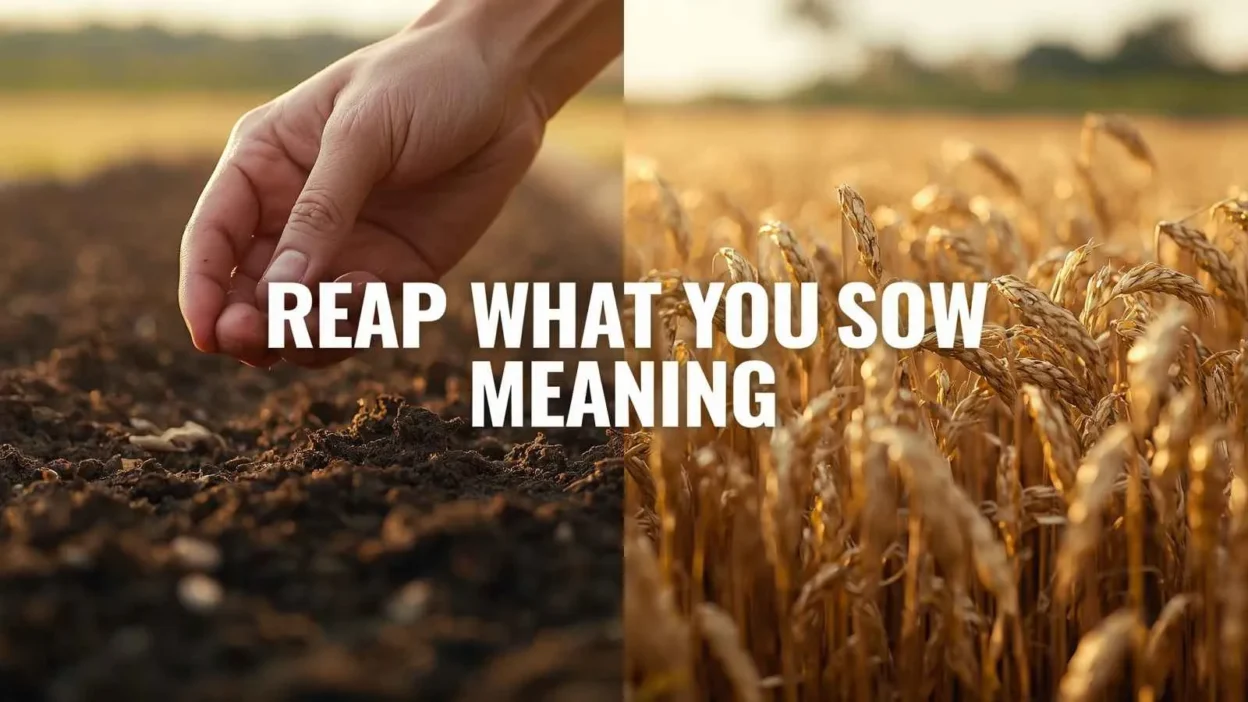
The phrase “reap what you sow” comes from farming. “Reap” means to harvest crops, and “sow” means to plant seeds. So literally, if you plant good seeds, you get a good harvest; if you plant bad seeds, the result won’t be good.
In texting or social media, it’s used as a metaphor to explain karma or consequences. People use it when someone faces results based on their actions.
For example:
- “He ignored everyone who helped him, now nobody supports him. Well… you reap what you sow.”
It’s not a slang abbreviation, but a figurative phrase used in both casual and serious conversations.
In short:
Reap what you sow = your actions determine your results = karma or consequences.
📱 Where Is Reap What You Sow Commonly Used?
This phrase is widely used across digital platforms and everyday conversations. It’s not limited to texting—it appears in emotional, motivational, and even dramatic contexts.
- 📱 Text Messages: Used in personal chats during arguments or reflections
- 📘 Facebook: Common in posts about life lessons or karma
- 🎵 TikTok: Used in captions about relationship drama or consequences
- 🐦 Twitter/X: Often used in commentary on public figures or events
- 🎮 Gaming Chats: Sometimes used after unfair behavior or trolling
- 💬 WhatsApp Groups: Shared as advice or moral reminders
It is usually neutral to slightly serious in tone, not flirty or humorous by default. However, depending on context, it can feel sarcastic or dramatic.
💬 Examples of Reap What You Sow in Conversation
Here are real-life style chat examples showing how people use it:
1. Friendship drama
A: “She stopped talking to me after getting new friends.”
B: “That’s sad… but people reap what they sow.”
2. Relationship situation
A: “He cheated and now she left him.”
B: “Honestly, you reap what you sow.”
3. Work scenario
A: “He never helped in group work, now he failed the project.”
B: “Well, actions have consequences 😬 reap what you sow.”
4. Social media comment
A: “He kept spreading rumors and now everyone avoids him.”
B: “Reap what you sow 💯”
5. Advice tone
A: “I regret how I treated my friends.”
B: “Learn from it—what you sow now shapes your future.”
6. Family discussion
A: “He never studied but still expects good grades.”
B: “You can’t expect results without effort. Reap what you sow.”
7. Motivational reminder
A: “Trying to stay consistent with my goals.”
B: “Good! You’ll reap what you sow later 💪”
🕓 When to Use and When Not to Use Reap What You Sow
This phrase is powerful, but not always appropriate. It depends on tone and situation.
✅ When to Use
- Giving life advice or lessons
- Talking about consequences of actions
- Reflecting on karma or fairness
- Motivational or emotional conversations
- Discussing behavior and results
❌ When Not to Use
- Very sensitive situations (loss, trauma, grief)
- Professional or formal emails
- When someone needs comfort, not judgment
- Legal or serious complaints
- Situations where empathy is more important than blame
📊 Context Comparison Table
| Context | Example Phrase | Why It Works |
|---|---|---|
| Friend Chat | “You ignored them, now you’re alone… you reap what you sow 😅” | Casual reflection |
| Work Chat | “Effort determines results.” | More professional alternative |
| “Outcomes are influenced by actions taken.” | Formal & neutral | |
| Advice Talk | “Be careful with your actions you reap what you sow.” | Moral guidance |
🔄 Similar Slang Words or Alternatives
While “reap what you sow” is more of a proverb, there are similar slang or phrases that carry the same meaning.
| Slang / Phrase | Meaning | When to Use |
|---|---|---|
| Karma | What goes around comes around | Casual chats, social media |
| You asked for it | You caused your own problem | Sarcastic or direct replies |
| Actions have consequences | Every action has results | Neutral advice |
| What goes around comes around | Similar to karma | Reflective conversations |
| Play foolish games, win foolish prizes | Bad actions lead to bad outcomes | Humorous sarcasm |
These alternatives can feel softer, harsher, or more playful depending on how you use them.
❓ FAQs About Reap What You Sow Meaning
1. Is “reap what you sow” a slang term?
No, it’s not slang. It is an idiom or proverb used in English to describe consequences of actions.
2. Is it negative or positive?
It can be both. If someone does good, they get good results. If someone does bad, they face consequences.
3. Can I use it in texting?
Yes, but mostly in serious or reflective conversations, not casual fun chats.
4. Is it rude to say “you reap what you sow”?
It can feel rude if used harshly, especially when someone is going through a tough situation.
5. What is a simpler way to say it?
You can say:
- “Your actions have consequences”
- “What you do comes back to you”
- “Karma”
6. Is it used in business or formal writing?
Rarely in its original form. Instead, more professional phrases like “results reflect effort” are used.
7. Why is it so popular online?
Because it fits perfectly in drama, relationship talk, and motivational posts, which are common on social media.
Conclusion:
“Reap what you sow” is an idiom that means your actions good or bad will eventually lead to corresponding results. Just like a farmer harvests (reaps) what they plant (sow), people experience outcomes based on their choices, behavior, and efforts.
Overall, understanding this phrase highlights the idea of cause and effect in life. It reminds us that positive actions often lead to positive results, while negative actions can bring negative consequences.

I’m Oscar Wilde, the Joke Master at JokeDrops.com. With a flair for wit and a love for clever humor, I turn ordinary moments into laughter worth sharing!