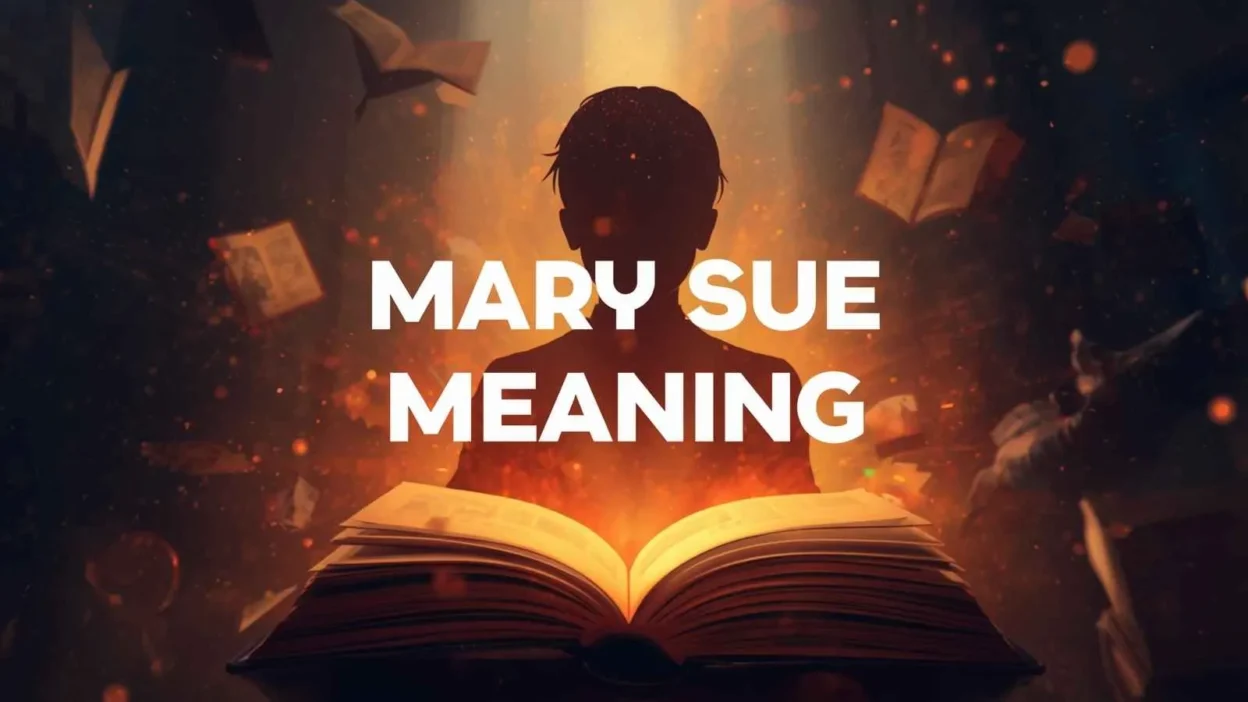
If you’ve ever been scrolling through TikTok comments, fanfiction reviews, or Reddit threads and suddenly seen someone say “this character is such a Mary Sue,” you might’ve paused for a second.
It sounds like a real person’s name, not internet slang. Many people first think it’s a compliment or maybe even a nickname but the context usually feels negative or critical, which makes it even more confusing.
The term shows up a lot in discussions about movies, books, anime, and fanfiction, especially when fans debate whether a character feels “too perfect.”
Quick Answer:
Mary Sue means “a fictional character who is unrealistically perfect, overly powerful, and often lacks meaningful flaws or challenges.”
It’s a critical storytelling term used to describe characters that feel unrealistic or poorly developed.
🧠 What Does Mary Sue Mean in Text?
A Mary Sue is not an acronym or a full-form slang term it is a literary and fandom expression used to describe a character who seems perfect in almost every way.
Typically, a Mary Sue character:
- Is extremely talented without training
- Is loved by everyone in the story
- Faces no real consequences
- Solves major problems too easily
- Often becomes the center of attention without reason
For example:
“She defeated the villain on her first try, became the leader instantly, and every character admired her… she feels like a Mary Sue.”
This doesn’t necessarily mean the character is “bad,” but it suggests the writing may feel unrealistic or lacking depth.
In short:
Mary Sue = unrealistically perfect fictional character = overpowered or poorly balanced storytelling figure.
📱 Where Is Mary Sue Commonly Used?
The term Mary Sue is widely used in online storytelling communities rather than casual texting slang.
You’ll mostly find it here:
- 🎬 Movie & TV fandoms (Marvel, Star Wars, anime discussions)
- 📚 Fanfiction platforms (Wattpad, Archive of Our Own)
- 📱 TikTok edits & commentary videos
- 💬 Reddit threads & writing forums
- 🎮 Gaming lore discussions (story-driven games)
It is not formal language, and it is usually used in:
- Casual criticism
- Fan debates
- Character analysis discussions
Writers and fans often use it to evaluate character realism and storytelling quality.
💬 Examples of Mary Sue in Conversation
Here are realistic online-style examples so you can see how it’s used:
A: “Did you read that new fanfic?”
B: “Yeah… the main character feels like a total Mary Sue 😭”
A: “Why is everyone praising her so much in the story?”
B: “No idea, she’s basically a Mary Sue lol”
A: “I like the movie, but the hero felt too perfect.”
B: “Same, kinda Mary Sue vibes”
A: “She learned magic in one day and saved everyone.”
B: “That’s literally Mary Sue energy 💀”
A: “Isn’t she supposed to be a beginner?”
B: “Yeah but she already beats experts… feels unrealistic, like Mary Sue writing”
A: “People are calling the new protagonist a Mary Sue.”
B: “Probably because she has no flaws or struggle development”
A: “I think she’s overpowered.”
B: “More like Mary Sue overpowered 😂”
🕓 When to Use and When Not to Use Mary Sue
The term can be useful in discussions, but it can also sound harsh if used carelessly.
✅ When to Use:
- Talking about fictional characters
- Discussing storytelling quality
- Reviewing books, movies, or fanfiction
- Friendly debates in fandom spaces
- Analyzing character development
❌ When Not to Use:
- Real-life people (it can sound insulting)
- Professional or academic writing without explanation
- Formal reviews unless clearly defined
- Sensitive conversations about creators or actors
📊 Comparison Table
| Context | Example Phrase | Why It Works |
|---|---|---|
| Fan Discussion | “This character feels like a Mary Sue” | Casual critique of fiction |
| Book Review | “The protagonist lacks flaws” | Neutral, professional tone |
| Formal Essay | “The character is underdeveloped” | Academic and respectful language |
| Social Media | “She’s giving Mary Sue energy 😂” | Informal, expressive online tone |
🔄 Similar Slang Words or Alternatives
If you hear “Mary Sue,” you might also see related storytelling terms. Here are some similar expressions:
| Slang / Term | Meaning | When to Use |
|---|---|---|
| Gary Stu | Male version of Mary Sue | Male overpowered characters |
| Overpowered (OP) | Too strong or unbalanced character | Gaming/anime discussions |
| Plot Armor | Character survives unrealistically | Story criticism |
| Unrealistic Character | Lacks believable traits | General storytelling feedback |
| Self-insert | Author writes themselves into story | Fanfiction analysis |
These terms often appear together in fandom conversations, especially when fans critique character writing styles.
❓ FAQs About Mary Sue Meaning
1. Is Mary Sue a compliment or insult?
It is usually a mild criticism, not a compliment. It suggests a character feels unrealistic or too perfect.
2. Is Mary Sue only used for female characters?
Traditionally yes, but now it can apply to any gender, including “Gary Stu” for male characters.
3. Where did the term Mary Sue come from?
It originated from fanfiction culture, especially Star Trek fan stories in the 1970s.
4. Is being called a Mary Sue always bad?
Not always. Some fans enjoy powerful characters, but critics use the term when development feels shallow.
5. Can real people be called Mary Sue?
Technically no it is meant for fictional characters only, not real individuals.
6. Why do people dislike Mary Sue characters?
Because they often lack struggle, flaws, or realistic growth, which can make stories feel less engaging.
Conclusion :
“Mary Sue Meaning” refers to a character type in storytelling who is often unrealistically perfect, lacking meaningful flaws, and frequently portrayed as exceptionally talented, attractive, or universally admired without earning it through believable development.
The term is commonly used in literature, film, fan fiction, and online writing communities to critique poorly developed characters who feel unrealistic or overly idealized.
Today, people search for Mary Sue meaning to better understand character analysis, writing quality, and storytelling techniques used in fiction. While the term is often used negatively, it also helps writers identify weaknesses in character creation and improve depth, conflict, and realism in their work.
A well-written character usually has strengths and flaws that make them relatable and engaging to audiences.
Overall, understanding “Mary Sue” is important for both readers and writers because it highlights the value of balanced character development, believable storytelling, and emotional depth in modern literature and media.

I’m Oscar Wilde, the Joke Master at JokeDrops.com. With a flair for wit and a love for clever humor, I turn ordinary moments into laughter worth sharing!