You’ve probably seen someone drop the phrase “it’s water under the bridge” in a chat or caption and paused for a second, wondering what on earth water has to do with past drama. It sounds poetic, but also a little confusing if you’re not familiar with idioms.
Maybe a friend said it after an argument, or you saw it under a TikTok comment where someone was talking about an old breakup. Either way, it feels like there’s a deeper meaning hiding behind those words.
Quick Answer:
Water under the bridge means “something from the past that is no longer important, and should be forgotten or forgiven.” It’s a friendly and calm way of saying that old issues don’t matter anymore.
In simple terms, it’s used when people decide not to hold onto past mistakes or conflicts and move on peacefully.
🧠 What Does Water under the bridge Mean in Text?
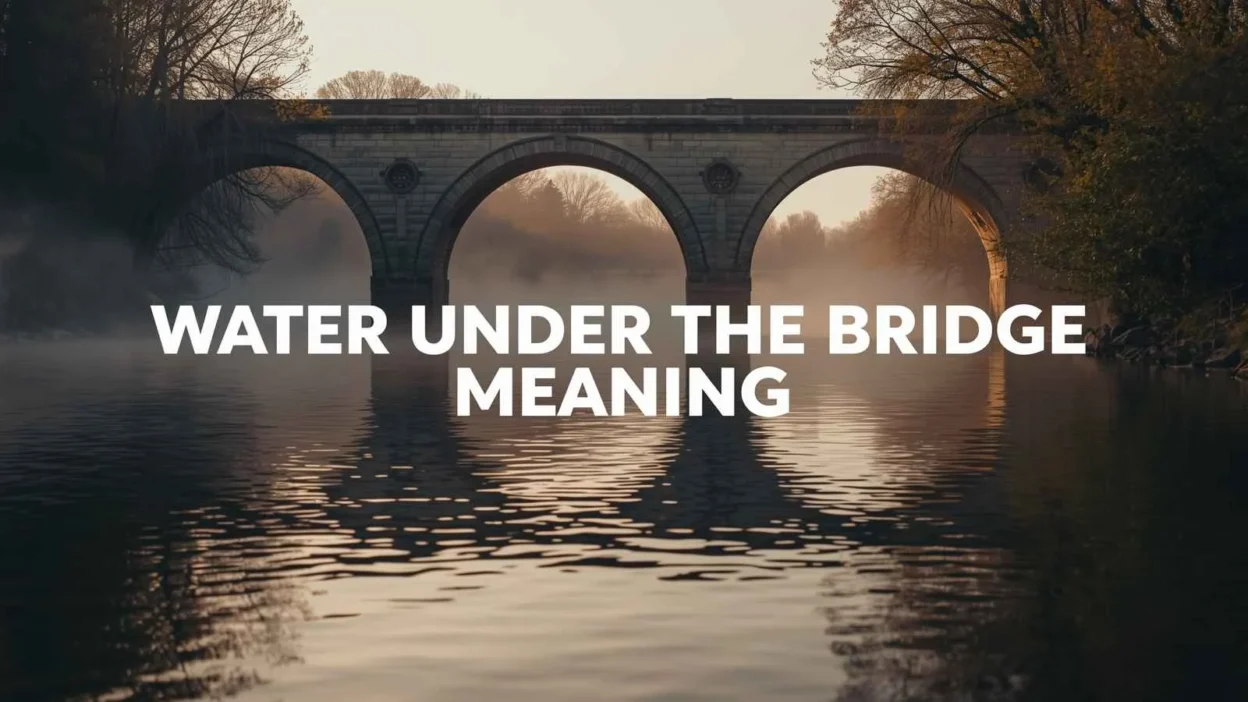
The phrase water under the bridge is an English idiom, not slang or an acronym. It comes from the idea that water flowing under a bridge moves away and never comes back—just like past problems that should be left behind.
So when someone says it in a conversation, they’re basically saying:
- “That issue is in the past now.”
- “Let’s not talk about it anymore.”
- “I’ve moved on from that situation.”
📌 Example sentence:
“Yeah, we argued a lot last year, but it’s water under the bridge now.”
🧾 In short:
Water under the bridge = Past issue that no longer matters = Forgiven and forgotten situation
It carries a calm, mature, and slightly emotional tone because it often involves letting go of grudges or old conflicts.
📱 Where Is Water under the bridge Commonly Used?
This phrase is widely used in both formal and informal English, especially in emotional or reflective conversations.
💬 Common places it appears:
- 📱 Text messaging (friends, partners, family)
- 🎥 TikTok captions or comments about relationships
- 🐦 Twitter/X posts about personal growth
- 💔 Breakup or reconciliation conversations
- 💼 Sometimes in workplace discussions (less common)
🎯 Tone & usage style:
- Mostly casual and reflective
- Can be slightly formal in writing or speeches
- Not used in gaming slang or ultra-short chat slang
- Emotionally mature expression
People often use it when they want to avoid reopening old arguments or to show they’ve emotionally moved on.
💬 Examples of Water under the bridge in Conversation
Here are some realistic chat examples showing how people actually use it in texting:
1. After an argument
A: “I’m really sorry about what I said last week.”
B: “It’s fine now, water under the bridge 🙂”
2. After a breakup
A: “Do you still think about what happened between us?”
B: “Not really… it’s water under the bridge.”
3. Between friends
A: “I know I forgot your birthday, I feel bad about it.”
B: “Don’t worry, water under the bridge bro.”
4. Workplace situation
A: “There was a mistake in last month’s report.”
B: “It’s water under the bridge, we fixed it already.”
5. Social media reply
A: “Aren’t you mad about what they said?”
B: “Nah, water under the bridge 😌”
6. Family conversation
A: “We had issues before, but we’re okay now.”
B: “Yes, it’s all water under the bridge.”
7. Friendly closure
A: “Thanks for understanding.”
B: “Of course, water under the bridge.”
🕓 When to Use and When Not to Use Water under the bridge
This phrase is emotionally useful, but not for every situation.
✅ When to Use:
- When you’ve forgiven someone
- When discussing past mistakes that are resolved
- In casual emotional conversations
- When you want to end an argument peacefully
- When showing maturity or closure
❌ When Not to Use:
- During active conflicts or ongoing arguments
- In urgent or serious legal matters
- In professional emails requiring clarity
- When emotions are still very raw
- In situations needing accountability or responsibility
📊 Context Comparison Table
| Context | Example Phrase | Why It Works |
|---|---|---|
| Friend Chat | “It’s water under the bridge 😄” | Casual & forgiving tone |
| Work Chat | “The issue is resolved.” | Neutral and professional |
| “This matter has been resolved.” | Formal and clear | |
| Conflict Talk | “Let’s not dwell on the past.” | Emotionally calming |
🔄 Similar Slang Words or Alternatives
Here are other phrases and slang expressions with similar meanings:
| Slang / Phrase | Meaning | When to Use |
|---|---|---|
| Let it go | Stop thinking about it | Casual chats, emotional advice |
| Move on | Progress past something | Breakups, life changes |
| Forgive and forget | Stop blaming and release anger | Emotional closure |
| Ancient history | Something very old and irrelevant | Light teasing or casual talk |
| It’s in the past | No longer important | Neutral conversations |
| No hard feelings | No anger or resentment left | Friendly closure |
These alternatives are often used depending on tone—some are softer, others more direct.
❓ FAQs About Water under the bridge
1. What does water under the bridge mean in simple words?
It means a past problem or mistake that is no longer important and should be forgotten.
2. Is water under the bridge positive or negative?
It is generally positive because it shows forgiveness, healing, and moving forward.
3. Can I use water under the bridge in texting?
Yes, it is very common in texting, especially when resolving conflicts or emotional topics.
4. Is water under the bridge formal or informal?
It can be both, but it is more commonly used in casual or conversational English.
5. Does water under the bridge mean forgetting everything?
Not exactly. It means accepting the past and not letting it affect the present.
6. Where did the phrase come from?
It comes from the idea that water flowing under a bridge moves away and cannot return, symbolizing the past being gone.
7. Can it be used in professional settings?
Yes, but it’s better to use more formal alternatives like “the issue has been resolved.”
8. Is it similar to “let it go”?
Yes, both express similar ideas, but “water under the bridge” feels more reflective and emotional.
🧾 Final Thoughts
The phrase water under the bridge is a powerful way to describe emotional closure. Instead of holding onto past mistakes, arguments, or regrets, it encourages acceptance and peace.
If you see it in a text message, a breakup conversation, or a social media caption, it always carries the same core idea: what happened before is over, and it’s time to move forward.
In everyday communication, it’s a simple but meaningful expression that helps people soften conflicts and focus on the present rather than the past.

I’m Oscar Wilde, the Joke Master at JokeDrops.com. With a flair for wit and a love for clever humor, I turn ordinary moments into laughter worth sharing!